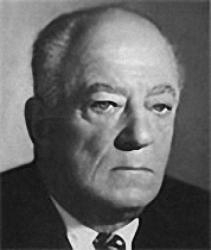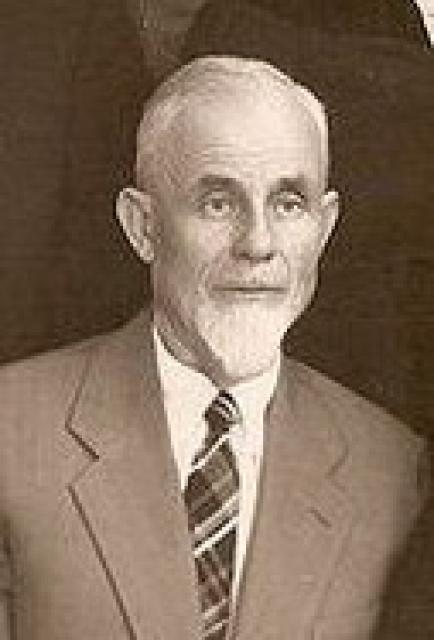
Alexander Korneyev
 Ukraine
Biography of Alexander Korneev
Alexander Porfiryevich Korneev, a Ukrainian zoologist, was born on September 12, 1903, in a family of a road master at the Tsibulevo Southwestern Railway station. He studied at the Mogilev-Podolsk Gymnasium. In 1920, he entered the preparatory course of the Biological Department at the Faculty of Education of the Kiev Institute of Popular Education. After graduating from the institute in 1926, he was sent by the Kiev Komsomol District Committee to the Berezansky District of the Kiev region, where he taught zoology at a labor school. In 1928, he published his article "Teaching Methodology for Organic Nature," summarizing his initial experience. In the same year, A.P. Korneev was invited to be an assistant at the Department of Zoogeography of the Kiev University. The department was headed by the renowned scientist and founder of the Kiev School of Ornithologists, Professor V.M. Artobolevsky. In addition to his teaching work at the university, the young zoologist devoted a lot of attention to studying animals in captivity. Until 1932, he served as the scientific director of the Kiev Zoo and led a youth circle at the zoo. In 1933, Korneev was elected an associate professor at the Department of Zoogeography, and in 1938, he was appointed the dean of the Faculty of Biology. In June 1940, Alexander Porfiryevich defended his candidate dissertation. From 1933 to 1941, A.P. Korneev carried out a series of expeditions to Teberda, the Black Sea coast, Azerbaijan, and the Western Pamirs. In 1939, he led an expedition to study roe deer in Ukraine. With the start of the Great Patriotic War in 1941, A.P. Korneev was appointed by the Central Committee of the Communist Party of Ukraine as the authorized person for the evacuation of treasures from the Kiev museums and the Kiev-Pechersk Lavra. They were transported by barge along the Dnieper River to Dnepropetrovsk and then by train to Ufa. In 1942, A.P. Korneev volunteered to join the front, despite having the right to exemption as the dean of the faculty. He fought in the 1st Air Army and reached Berlin with the 3rd Belorussian Front. Captain Korneev was awarded the Order of the Red Star and six medals for his combat merits. In 1946, A.P. Korneev returned to Kiev and took up the position of associate professor at the university. In 1948, he was elected head of the Department of Vertebrates. On July 15, 1953, the First Congress of the Ukrainian Society for Nature Conservation took place in Kiev. A.P. Korneev was elected to the Presidium of the society, where he remained for 34 years until his death. In 1962, Alexander Porfiryevich Korneev was awarded the title of professor without defending a doctoral dissertation for his significant scientific achievements. From 1965, he served as a professor-consultant at the Department of Vertebrate Zoology. During the advance of the Red Army in East Prussia in 1945, Alexander Porfiryevich Korneev had an unusual surprise. In the medieval castle of Heilsberg near Konigsberg, A.P. Korneev discovered a large collection of paleoarctic butterflies. He immediately recognized the collection from the native zoological museum of Kiev University, which was looted by the fascists before their retreat. All the materials were carefully packaged and transported back to Kiev. Soon, this collection became the basis for the restored museum of the Taras Shevchenko Kiev State University. In 1959, A.P. Korneev, together with other zoologists, advocated for the protection of foxes, which were decided to be exterminated in the republic by the resolution of the Council of Ministers of Ukraine. Professor Alexander Porfiryevich Korneev was the organizer of the Nature Conservation Student Detachment at the Kiev State University in 1969 and was elected chairman of the Coordination and Methodological Council of Student Detachments of Ukraine in 1983. Since 1966, at the initiative of A.P. Korneev, a month of silence has been held in the Ukrainian SSR, and from the beginning of the 1970s, local authorities started making decisions on the protection of early spring flowers. Alexander Porfiryevich Korneev gave over a thousand lectures, wrote hundreds of newspaper articles, and made dozens of radio appearances on nature conservation. The total circulation of his posters and brochures exceeded one hundred thousand.