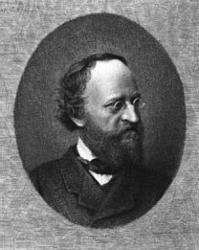
Alexander Kostenko
 Ukraine
- An Eminent Ukrainian Scholar in Law and Philosophy
- Naturalistic Worldview
- Social Naturalism
- The "Third Nature" Theory
- Reforming Social Sciences
- The Source of Values
- Social Culture and Progress
- Globalization and Crises
- Convergence of Sciences
- Legacy
An Eminent Ukrainian Scholar in Law and Philosophy
Early Life and EducationProfessor Oleksandr N. Kostenko, a renowned Ukrainian scholar in law and philosophy, was born in Ukraine. As a distinguished legal scholar, he holds a Doctor of Law degree and the esteemed title of Professor. Kostenko's exceptional academic credentials include his membership in the National Academy of Legal Sciences of Ukraine and his role as Head of the Department of Criminal Law, Criminology, and Judicial System at the V. M. Koretsky Institute of State and Law of the National Academy of Sciences of Ukraine. Additionally, he is a Professor at the National University of Kyiv-Mohyla Academy.
Naturalistic Worldview
Kostenko's research delves into the realm of naturalism, a philosophical perspective that postulates the fundamental unity of the universe. According to his theory, the essence of the world, known as "Nature," manifests itself in all that exists. Nature acts as the progenitor and lawgiver, giving birth to all beings and establishing the principles that govern cosmic harmony.
Social Naturalism
Based on his concept of natural unity, Kostenko formulated the principle of social naturalism. This principle recognizes the existence of not only physical and biological nature but also a distinct social nature. Social entities, he argues, operate according to their inherent laws, which differ from the laws governing physical and biological phenomena.
The "Third Nature" Theory
Kostenko's "three natures" theory posits that social phenomena constitute a "third" nature, with its own unique laws of existence. This theory challenges reductionist approaches that attempt to explain social phenomena solely in terms of physical or biological laws, thereby expanding the concept of naturalism to encompass the social sphere.
Reforming Social Sciences
Building upon the principle of social naturalism, Kostenko advocates for reforming social sciences into disciplines that study the natural laws governing human society. He proposes that human volition and consciousness should be aligned with these laws.
The Source of Values
According to Kostenko, every valuable aspect of human existence, from truth and virtue to freedom and well-being, originates from Nature. Social progress, he maintains, stems from the alignment of human will and consciousness with the laws governing social life.
Social Culture and Progress
Social culture, encompassing all aspects of human society, is a product of the degree to which human will and consciousness align with social laws. Kostenko's research demonstrates that social culture serves as the foundation for social progress.
Globalization and Crises
Kostenko analyzes globalization as a manifestation of the convergence of peoples toward the "common denominator" of natural laws governing social life. He attributes societal crises to the violation of these laws by individuals succumbed to self-will and illusions.
Convergence of Sciences
Kostenko emphasizes the imperative for integrating social and non-social sciences based on the idea of the natural unity of the universe. He advocates for the convergence of knowledge to achieve a comprehensive understanding of the world and its workings.
Legacy
Professor Kostenko's pioneering work has had a profound impact on the fields of legal philosophy and naturalism. His theories and insights have shaped the discourse on the relationship between nature, society, and human values. As a respected academic and a thought leader in his field, Oleksandr N. Kostenko continues to inspire and challenge scholars and policymakers alike, striving for a better understanding of the complex tapestry of human experience and the natural laws that govern it.