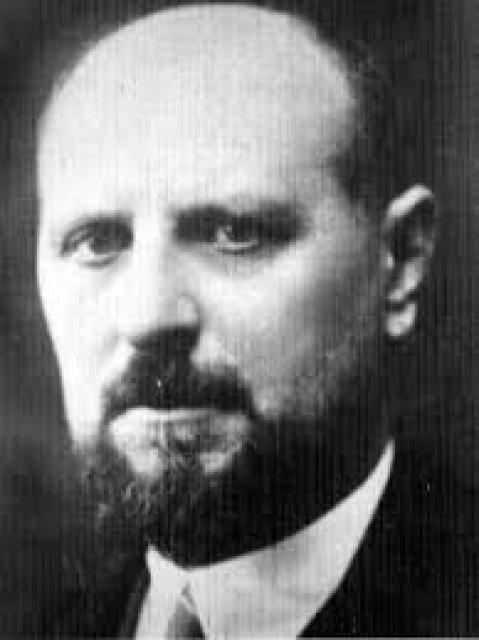
Alexander Tsankov
 Bulgaria
- Alexander Tsankov: The Notorious Fascist Leader of Bulgaria
- Political Career and Rise to Power
- Role in the Fascist Coup and Government
- Subsequent Political Engagements
- Exile and Emigration
- Legacy
Alexander Tsankov: The Notorious Fascist Leader of Bulgaria
Early Life and EducationAlexander Tsankov was born on June 29, 1879, in Oryahovo, Bulgaria. He graduated from the Faculty of Law at Sofia University in 1904 and later pursued advanced studies in state law and economics at universities in Munich, Berlin, and Breslau.
Political Career and Rise to Power
In 1911, Tsankov became a lecturer at Sofia University and rose to the rank of professor in 1919, serving as rector from 1919 to 1920. He was a prominent member of a Masonic lodge and joined the nationalist organization "People's Union" in 1922.
Role in the Fascist Coup and Government
Tsankov played a key role in the military-fascist coup that overthrew the government of Alexander Stamboliyski on June 9, 1923. He served as Prime Minister from June 9, 1923, to January 4, 1926, and brutally suppressed the September Anti-fascist Uprising in 1923. He also banned the Communist Party and other democratic organizations in 1924.
Subsequent Political Engagements
In 1926, Tsankov became the Chairman of the National Assembly. He founded the fascist party National Social Movement in 1932 and was elected to the parliament numerous times. During the Second World War, he advocated for an alliance between Bulgaria and Nazi Germany and played a major role in the country's decision to declare war on the Soviet Union.
Exile and Emigration
After Soviet troops entered Bulgaria in 1944, Tsankov fled to Germany, where he formed a National Bulgarian Government in exile. He later escaped to South America and was sentenced to death in absentia by the Bulgarian People's Tribunal in 1945.
Legacy
Tsankov's fascist ideology and actions left a lasting impact on Bulgaria. He was a ruthless dictator who suppressed dissent and inflicted suffering on the Bulgarian people. His legacy serves as a reminder of the dangers of extreme nationalism and the importance of preserving democracy and human rights.


