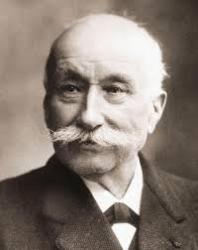
Alexey Ivahnenko
 Ukraine
Biography of Alexey Ivakhnenko
Alexey Georgievich Ivakhnenko was a renowned scientist in the field of automatic control, cybernetics, and informatics. He was born in the city of Kobelyaky in the Poltava Governorate in a family of a teacher. His father, Grigory Ivakhnenko, and mother, Maria Operman, provided a supportive environment for his education and intellectual pursuits.
In 1932, Ivakhnenko graduated from the Kiev Power Engineering College. He then pursued his studies at the Leningrad Electrotechnical Institute, where he further honed his technical knowledge and skills. After completing his education, he started working at the All-Union Electrotechnical Institute (VIE, Moscow).
In 1944, Ivakhnenko became an employee of the Institute of Construction Mechanics in Kiev. He later worked at the Institute of Electrical Engineering of the Ukrainian Academy of Sciences and became a professor at the Kiev Polytechnic Institute. In 1963, he came under the guidance of his scientific opponent, academician V. M. Glushkov.
Ivakhnenko gained scientific recognition for his work in the theory of invariants and the theory of combined systems of automatic control that operated on the principle of automatic error elimination. These systems were used in the control of electric motors. His groundbreaking publication in the journal "Automation" titled "The Group Accounting Method of Arguments - A Competitor to the Stochastic Approximation Method" marked a new direction of research - heuristic self-organization of models, or inductive modeling.
He developed a methodology for automatically building models based on experimental data. This methodology utilized the principles of automatic model construction from arrays of experimental data, automatic generation of variants, partial solutions, and sequential selection (which later became known as building worlds in artificial intelligence and found its highest development in the Lisp-based system KEE). This method was widely used in solving practical problems of modeling, pattern recognition in ecology, hydrometeorology, and economics.
In the early 1980s, Ivakhnenko focused on models with noise and noise-resistant models. His contributions were internationally recognized, as evidenced by the collective monograph published by American and Japanese scientists in 1984 to celebrate his 70th birthday. Ivakhnenko authored over 400 scientific papers and nearly 30 monographs, many of which have been translated into foreign languages.
Under Ivakhnenko's guidance, around 200 candidate dissertations were defended, and nearly 30 of his students obtained doctoral degrees. He held the title of Honored Worker of Science and Technology of Ukraine and was awarded two State Prizes of the USSR. He was also decorated with the Order of Friendship of Peoples and several medals.
Alexey Ivakhnenko's contributions to the field of automatic control and his extensive body of work have left a lasting impact on the scientific community. His innovative methodologies and theories continue to be studied and applied in various domains, solidifying his legacy as a pioneering scientist.