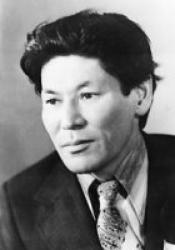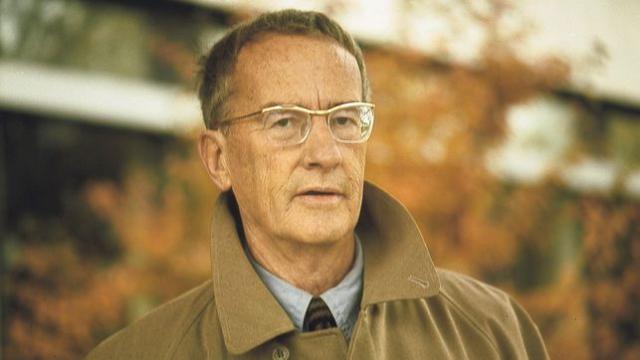
Alfred Hellmuth Andersch
 Germany
- Alfred Andersch: A Versatile German Literary Titan
- Disillusionment and Internal Resistance
- War, Desertion, and Prisoner of War
- Literary Success and Editorial Roles
- Autobiography and Acclaim
- Move to Switzerland and Political Involvement
- Literary Legacy
Alfred Andersch: A Versatile German Literary Titan
Early Life and Political ActivismAlfred Hellmuth Andersch was born in Munich, Germany, in 1914, to a Prussian army officer. Among his school educators was Gebhard Himmler, the father of Heinrich Himmler. As an apprentice bookseller in the 1930s, Andersch embraced communism and became a youth leader. In 1933, he spent three months imprisoned in the Dachau concentration camp for his political activities.
Disillusionment and Internal Resistance
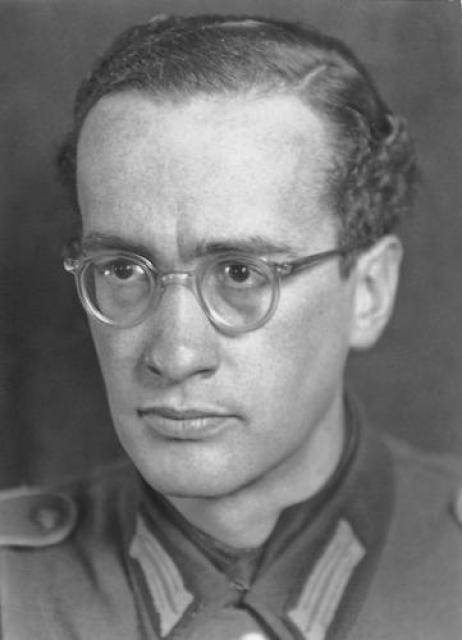
After his release, Andersch renounced communism and withdrew into "total introversion." During this period of despair, he developed a keen interest in the arts and entered a phase of "internal emigration," outwardly adhering to Nazi Germany while inwardly resisting its oppressive regime.
War, Desertion, and Prisoner of War
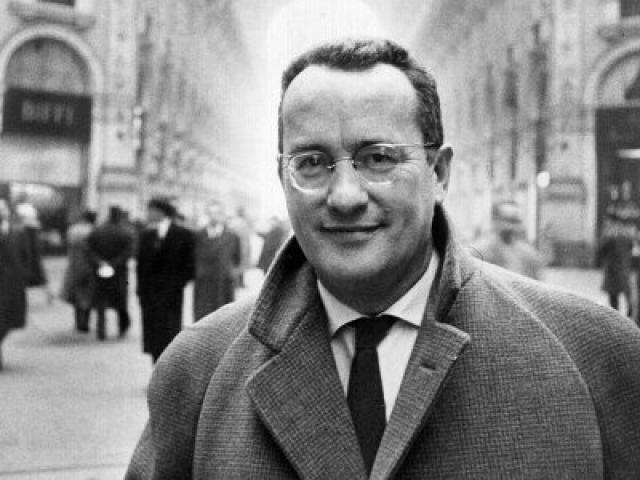
Drafted into the Wehrmacht in 1940, Andersch seized the first opportunity to desert in Italy. He was subsequently captured and interned in POW camps in the United States, including Camp Ruston in Louisiana. During his internment, he edited the camp newspaper, "Der Ruf."
Literary Success and Editorial Roles
Following his return to Germany in 1945, Andersch became the assistant editor of the "Neue Zeitung." He also joined the literary association "Group 47," where he collaborated with renowned writers such as Ingeborg Bachmann, Wolfgang Hildesheimer, and Arno Schmidt. In 1948, he published his influential essay "Deutsche Literatur in der Entscheidung" ("German Literature at the Turning Point") and became a leading radio broadcaster.
Autobiography and Acclaim
In 1952, Andersch published his autobiography "Die Kirschen der Freiheit" ("The Cherries of Freedom"), which focused on his decision to desert the army as a pivotal moment in his life. He also explored this theme in his novel "Sansibar oder der letzte Grund" (1957), later adapted into a television series.
Move to Switzerland and Political Involvement
In the late 1950s, Andersch settled in Berzona, Switzerland, where he served as mayor from 1972. He married Gisela Dichgans, and resided there until his death on February 21, 1980.
Literary Legacy
Andersch's body of work includes the short story collection "Geister und Leute; zehn Geschichten" (1958), the novel "Efraim" (1967), the short story collection "Mein Verschwinden in Providence" (1971), the novel "Winterspelt" (1974), and various anthologies. His unfinished short story "Der Vater eines Mörders" ("The Father of a Murderer") was published posthumously.