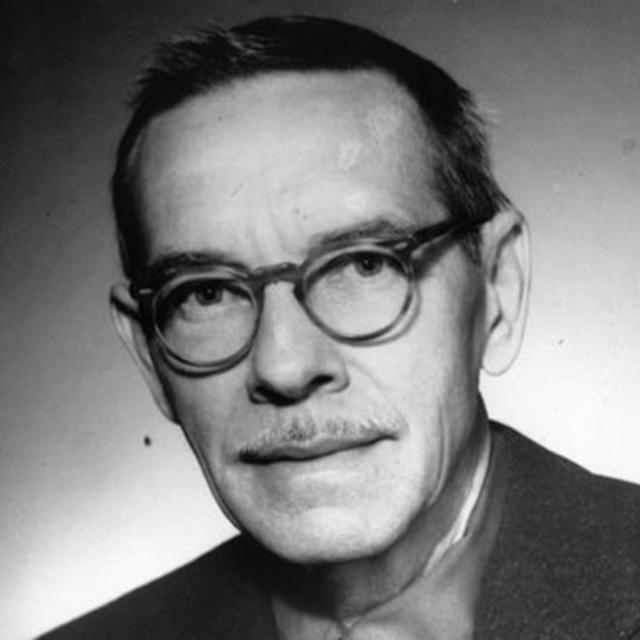
Alfred Hershey
 USA
USABiography of Alfred Hershey
Alfred Hershey, together with Max Delbrück and Salvador Luria, was awarded the Nobel Prize in Physiology or Medicine in 1969. He attended a general education school in Owosso and Lansing before enrolling in Michigan State College (now Michigan State University), where he obtained a bachelor's degree in natural sciences in 1930. Remaining in Michigan to complete his education, Hershey received a doctorate in bacteriology in 1934 and then began working as an assistant in the Department of Bacteriology at Washington University in St. Louis, Missouri. Two years later, he became a lecturer, in 1938 he was appointed an assistant professor, and in 1950 he became an adjunct professor.
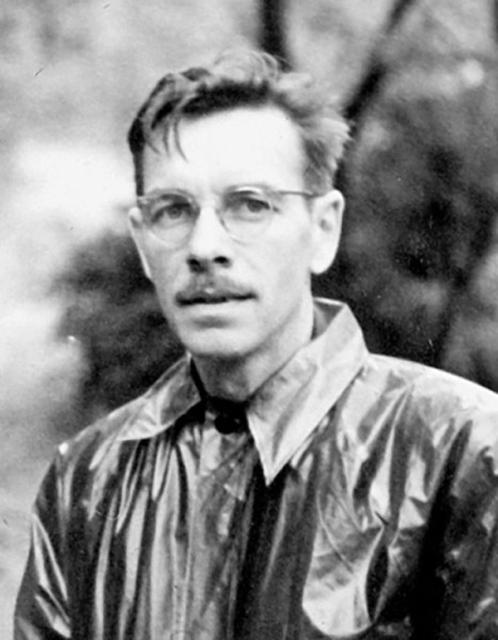
In his early years at Washington University, Hershey conducted research under the guidance of Professor Bronfenbrenner, who had been studying bacteriophages since their discovery in 1915. Bacteriophages are a type of virus that infects bacterial cells and represent the simplest form of life. They consist of protein and nucleic acid, similar to other viruses. In the early 20th century, scientists demonstrated that genes are responsible for the inheritance of physical traits and are located in the chromosomes of each cell nucleus. Chromosomes contain proteins associated with nucleic acids, large molecules consisting of monosaccharides, phosphate, and nitrogen-containing bases known as purines or pyrimidines. Biochemists discovered two types of nucleic acids: ribonucleic acid (RNA) and deoxyribonucleic acid (DNA). It was believed that only proteins, which are composed of amino acids linked in chains, were complex enough to carry genetic information, while DNA molecules were considered too repetitive and monotonous. However, in the 1940s, it was discovered that genes are made of DNA and that DNA directs the synthesis of proteins, enzymes, and coenzymes necessary for normal enzyme activity, thereby establishing the role of DNA in controlling biochemical processes in cells.
From 1940 to 1947, Max Delbrück studied the life cycle of bacteriophages at Vanderbilt University in Nashville, Tennessee. Together with Salvador Luria from Columbia University, he demonstrated that bacterial cells undergo spontaneous mutation to resist destruction by bacteriophages. The results of these studies, published in 1943, became a model for analyzing experimental results in bacteriology. Delbrück, Luria, and Hershey formed an unofficial group called the "phage group" with the aim of studying bacteriophages, particularly their replication mechanisms. The "phage group" encouraged other scientists to concentrate their efforts on studying seven strains of bacteriophage that infect the B strain of Escherichia coli bacteria, making it easier to compare experimental results. In 1946, Hershey and Delbrück, conducting independent research, discovered that different strains of bacteriophage can exchange genetic material when multiple strains affect the same bacterial cell. Hershey, being a brilliant experimenter in contrast to Delbrück's theoretical approach, provided indisputable evidence of the exchange of genetic information, which he called gene recombination. This was one of the first experimental proofs of genetic material recombination between viruses.
In 1950, Hershey left Washington University to join the Genetics Research Department at the Carnegie Institution in Cold Spring Harbor on Long Island, New York. Electron microscopy revealed that the structure of bacteriophage consists of a protein head encapsulating DNA and a thin tail extension. In 1952, Hershey, together with geneticist Martha Chase, discovered how bacteriophages infect bacterial cells. Their research method was based on the fact that the phage protein does not contain phosphorus, while its DNA does not contain sulfur. After cultivating two batches of bacteriophage – one with radioactive phosphorus and the other with radioactive sulfur – the researchers traced the isotope's path during the interaction between the bacteriophage and bacterial cell. They determined that the bacteriophage first attaches to the bacterial cell membrane with its protein tail, and then the nucleic acid inside the phage is introduced into the bacterial cell. To separate the free phage shells containing sulfur isotope from the bacterial cells labeled with phosphorus, the suspension was placed in a blender and agitated to disrupt the attachment of phage tails to bacterial membranes. In the final step, the suspension was centrifuged to separate the cell fraction from the liquid. The results of these experiments confirmed that DNA is the genetic material of the bacteriophage and, consequently, of all other organisms.
Throughout the 1950s and 1960s, Hershey continued to study the biochemical structure and function of bacteriophage DNA. His research demonstrated that bacteriophage DNA is composed of a single strand, unlike the DNA of higher organisms, and that some bacteriophage DNA has a circular structure. In addition, DNA of different species differs from each other. In 1969, Hershey, Luria, and Delbrück were awarded the Nobel Prize in Physiology or Medicine "for discoveries concerning the replication mechanism and genetic structure of viruses." Sven Gard from the Karolinska Institute, during the presentation of the prize, emphasized the significance of these discoveries for biochemistry, genetics, and other scientific fields. He added that all three laureates "can rightfully be called the founders of a new science – molecular biology."
From 1962 until his retirement in 1974, Hershey headed the Genetics Research Department at Cold Spring Harbor. "Although it is hard to imagine people more dissimilar than Delbrück, Luria, and Hershey," wrote Günter Stent from the Harvard Medical School, "they shared one common characteristic – absolute honesty, and it is this characteristic that accounted for the influence of these men on an entire scientific discipline." In 1943, Max Delbrück described his first meeting with Hershey in a letter to Luria: "Prefers whiskey to tea, easy to communicate with, by the way, enjoys sailing in a sailboat, appreciates independence."
In 1946, Hershey married Harriet Davidson, and they had a son. Hershey received an honorary degree from the University of Chicago and the Albert Lasker Award from the American National Health Society (1958) and the Kimber Award in Genetics from the National Academy of Sciences (1965). He was a member of the American Academy of Arts and Sciences and the National Academy of Sciences.





