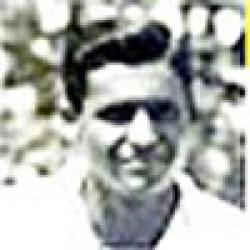
Alfredo Almeida Rego
 Brazil
- Early Life and Football Beginnings
- São Cristóvão’s Historic Championship
- Brazilian National Team
- Later Career and Legacy
Known to football fans as Doca, Alfredo Almeida Rego was a Brazilian forward whose career reached its high point in the lively club scene of Rio de Janeiro in the 1920s and 1930s. He played for Mackenzie, São Cristóvão and Flamengo, helped São Cristóvão win the 1926 state championship, and represented Brazil in the era of the first World Cup.
Early Life and Football Beginnings
Almeida Rego was born in Rio de Janeiro on April 7, 1903. Little detailed information about his childhood survives in widely available accounts, but his path into football led him to Sport Club Mackenzie, a Rio side where he began his senior career in the early 1920s. Playing as a forward, he developed in a period when Brazilian football was still amateur and club rivalries were building the sport’s mass following.
São Cristóvão’s Historic Championship
In 1926, Doca joined São Cristóvão, where he became part of one of the club’s most celebrated teams. São Cristóvão finished the Campeonato Carioca season as champions, the first and, to date, only state title in the club’s history. The decisive match was a 5–1 victory over Flamengo, a result that secured the championship and cemented the team’s place in Rio football history.
Doca spent several seasons with São Cristóvão, playing in an era when the club could challenge the established powers of the city. He later moved to Flamengo, one of Brazil’s most famous clubs, continuing his career into the mid-1930s.
Brazilian National Team
Almeida Rego was selected for Brazil during the early years of the national team’s international profile. He was associated with the Brazilian delegation around the 1930 World Cup and is credited with one appearance and one goal for the national side. Contemporary record summaries identify him by his nickname, Doca, rather than by his full name, a reminder of how footballers of that period were often known to supporters.
The surviving statistical record is brief, but the achievement stands out: he joined the small group of players who represented Brazil in the formative years of the World Cup era, while also maintaining a club career in Rio.
Later Career and Legacy
Doca’s senior clubs were Mackenzie, São Cristóvão and Flamengo. His greatest collective honor came with São Cristóvão in 1926, when the club’s championship win briefly placed it at the summit of Rio football. The period also marked a transition in Brazilian football, as the game’s audience and institutions expanded and the move toward professionalism gathered pace.
Detailed accounts of Almeida Rego’s later life are scarce, and published biographical records do not consistently give a death date. His football legacy is therefore preserved chiefly through club histories and national-team archives: an attacking player from Rio whose name remains tied to São Cristóvão’s remarkable 1926 title and to Brazil’s earliest World Cup generation.