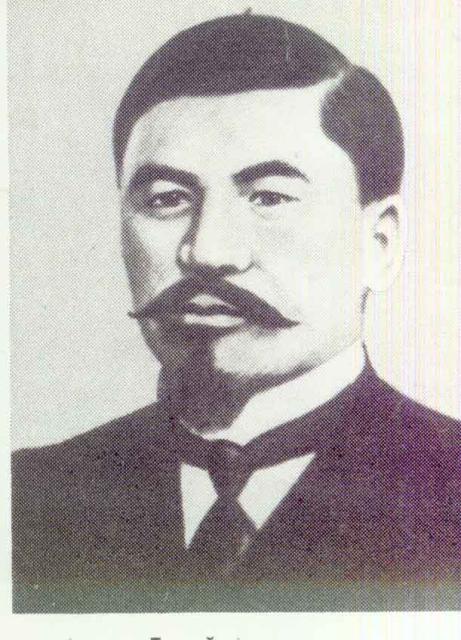
Alihan Bukeyhanov
 Kazakhstan
- Biography of Alikhan Bukaykhanov
- Contributions to Kazakh Culture
- Political Activism
- Leadership and Masonic Connections
- Formation of the Alash Party
- Conflict and Repression
- Legacy
Biography of Alikhan Bukaykhanov
Alikhan Nurmuhammed-uly Bukaykhanov was a prominent Kazakh public figure, teacher, journalist, and ethnographer. He was born in the Karkaralinsky district of the Karaganda region in 1866 and was executed in Moscow on September 27, 1937. Bukaykhanov studied at the Omsk Technical School and the Economic Faculty of the Forestry Institute in St. Petersburg. After completing his studies, he worked as a teacher and conducted scientific research at the Omsk School of Forestry.
Contributions to Kazakh Culture
In 1903, Bukaykhanov co-authored a volume titled "Russia. Complete Geographic Description of Our Region" in St. Petersburg. In the section dedicated to Kazakhstan, he provided an overview of the Kazakh culture, focusing on the analysis of the epic poem "Kozy-Korpesh and Bayan." He also highlighted the importance of Abai, considering him a representative of a new trend in Kazakh poetry. Bukaykhanov made efforts to introduce Abai to Russian readers, emphasizing the intellectual connection between Abai and the Kazakh intelligentsia striving for the self-determination of the Kazakh people.
Political Activism
In 1904, Bukaykhanov participated in an expedition led by F.A. Shcherbin, which aimed to facilitate the resettlement of Russian peasants to Kazakh lands. He became a member of the Constitutional Democratic Party in 1905 and organized meetings in Uralsk and Semipalatinsk to establish a Kazakh division of the party. He also played a significant role in the Karkaralinsk protest movement against the oppression of the tsarist regime in 1905, gathering 14,500 signatures for a petition known as the Karkaralinsk Petition. In the same year, Bukaykhanov was elected as a deputy to the First State Duma of Russia for the Semipalatinsk district and participated in drafting the Vyborg Manifesto, which condemned the dissolution of the tsar's Duma.
Leadership and Masonic Connections
Bukaykhanov became the commissioner for the Temporary Government in Kazakhstan in 1917 and was known to have connections with the St. Petersburg Masonic Lodge "Polar Star." There is speculation that his appointment as commissioner was influenced by the Masonic fraternity, which held power at the time. The Masonic organization, along with bourgeois parties, aimed to overthrow the autocracy and seize political power. Bukaykhanov believed that through Masonry, he could achieve his goals of autonomy for Kazakhstan, including a parliament, self-governance, control over finances, legislation, and other attributes of statehood.
Formation of the Alash Party
After the February Revolution, Bukaykhanov's alignment with the Cadets (Constitutional Democratic Party) and Masons dissolved because they did not support his main goal of granting autonomy to the Kazakh people. In response, he left the Cadet Party and founded the Alash National Party. The ideological groundwork for the party was laid through the newspaper "Kazakh," which began publication in 1913. In December 1917, Bukaykhanov initiated the All-Kazakh Constituent Kurultai, where the autonomy of the Kazakhs was proclaimed under the name "Alash-Orda." He also participated in the Siberian Autonomist Congress in Tomsk, where autonomy for the Kazakhs within the Siberian Republic was discussed.
Conflict and Repression
During the Russian Civil War, Bukaykhanov and the Alash-Orda party found themselves on the opposing side of the Bolsheviks and fought alongside the Siberian authorities until almost the end of 1919. They eventually reached a compromise with their ideological and political opponents, which resulted in the Alash-Orda party entering into an agreement with the Bolsheviks to preserve the Kazakh's national autonomy. However, this agreement was later disregarded by the Bolsheviks, and accusations of being an "Alash-Orda nationalist, enemy of the people" became the basis for the severe repression against Bukaykhanov and other intellectuals.
Legacy
Alikhan Bukaykhanov's most significant contribution was his advocacy for the national self-determination of the Kazakh people. He and his fellow activists dedicated their efforts to establish the state "Alash-Orda" and achieved the first autonomous Kazakh state in 1918. Despite facing repression and eventually withdrawing from active political life, Bukaykhanov continued to work in the cultural sphere, criticizing the Soviet regime's policies and defending the rights of the Kazakh people. His dedication to preserving Kazakh identity and autonomy left a lasting impact on the nation's history.