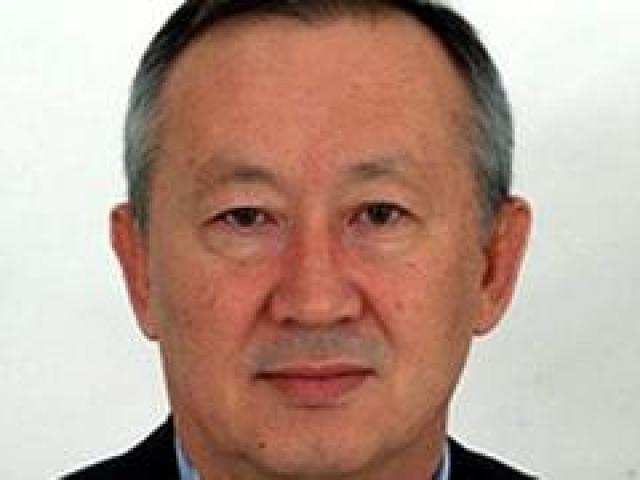
Alnyr Mysaev
 Kazakhstan
Biography of Alnur Musaev
Alnur Alzhaparovich Musaev was born on January 4, 1954, in the village of Lugovoye in the Zhambyl region of Kazakhstan. He graduated from the mining faculty of the Kazakh Polytechnic Institute in 1976 and subsequently worked at the South Kazakhstan Geological Administration while also leading one of the Komsomol organizations. In 1979, Musaev entered the Higher School of the KGB of the USSR and upon completion, he was sent to the counterintelligence units of the KGB of the Kazakh SSR. It is rumored that he was on a special mission in Iraq from 1983 to 1984.
From 1986 to 1989, Musaev worked in the central apparatus of the Ministry of Internal Affairs (MVD) of the USSR and later returned to the KGB. In 1994, Musaev became the head of the Main Directorate for Combating Organized Crime and Corruption of the MVD of Kazakhstan. In November 1995, he became an assistant to the President of Kazakhstan and later the First Deputy Commander of the Republican Guard and the head of the Presidential Security Service. According to Musaev's own admission, in 1995, he organized the sale of 578 kilograms of nuclear uranium weapons abroad at the request of President Nursultan Nazarbayev.
In May 1997, Musaev was appointed Chairman of the National Security Committee (KNB) of Kazakhstan, succeeding Lieutenant General Janisbek Jumanbekov, and was concurrently awarded the rank of General. During his tenure as head of the KNB, Musaev launched an unprecedented reform of the leadership, resulting in the resignation of all deputy chairmen. He actively fought against corruption, particularly targeting various levels of akims (administrative heads). Some sources also mention that he exerted pressure on opposition forces, leading to incidents of journalists being assaulted by KNB officers and newspaper confiscations. In 1998, ahead of the presidential elections in January 1999, Musaev became the First Deputy Chairman of the KNB, while Nurtai Abykaev became the Chairman. The ongoing fight against corruption during this period also affected former Prime Minister Akzhan Kazhegeldin. In August 1999, Abykaev, accused of attempting to sell combat aircraft abroad, resigned and Musaev once again became the chairman of the committee.
In early May 2001, Marat Tazhin was appointed Chairman of the KNB, while Musaev became the head of the Presidential Security Service. Musaev's transfer to another position was seen as both strengthening the security service and as a sign of President Nazarbayev's dissatisfaction with Musaev. In February 2002, Musaev left this position as well. Musaev's name reappeared in the media in early 2007 in connection with a high-profile case involving the kidnapping of Joldas Timraliyev and Aibar Hasenov, employees of "Nurbank," in Kazakhstan. Rahat Aliyev, Nazarbayev's son-in-law, the Ambassador of Kazakhstan to Austria, and a close friend of Musaev, was suspected of involvement in the kidnapping. As a result of the ensuing conflict between the authorities and Aliyev, the KTK television channel, where Musaev was a member of the supervisory board from 2001 to 2007, came under scrutiny. In May 2007, a senior KKNK official was arrested. Along with other members of the supervisory board, Musaev issued a statement describing the incident as the "agony of a system mired in corruption, intoxicated with boundless impunity and lawlessness." However, according to some reports, Musaev sent letters to the President's administration, the KNB, and the Security Council, disavowing his signature on this statement. During this time, Musaev claimed that Aliyev advised him to leave Kazakhstan, and he flew to Vienna. In August, Musaev, along with Aliyev, was internationally wanted on charges related to "Nurbank."
The trial in this case began in November 2007 in the absence of Aliyev and Musaev. They were accused of creating an organized criminal group, leading it, and unauthorized wiretapping of high-ranking government officials. In January 2008, Musaev was sentenced to 15 years in prison with confiscation of property. From January to March 2008, another trial was held in the military court of the Akmola Garrison against Aliyev and his supporters, during which Aliyev and Musaev were accused, among other things, of planning a violent coup. It was alleged that they had formed a group called the "Top Secret Directorate" as early as 1997. According to the verdict of the second trial, Musaev was also found guilty of espionage and sentenced to 20 years in prison. In May 2008, Aliyev and Musaev were also stripped of their military ranks and medals. In the same month, Musaev wrote an open letter to Nazarbayev, denying all the charges against him. While abroad, Musaev was repeatedly attacked, including a well-known incident in Vienna in late September 2008. According to Musaev's own speculation at the time, these attacks were organized by the Kazakh special services.
On July 22, 2009, the Prosecutor General's Office of Kazakhstan unexpectedly sent a letter to the Austrian authorities suspending the extradition request for Musaev for three months. Subsequently, Musaev claimed that this was a response to the materials he had sent to Kazakhstan in early July as part of his own investigation into the kidnapping case of "Nurbank" employees. Afterward, on August 12, Musaev withdrew his testimony given to the court in Vienna in October 2007 during the extradition case of Imashev, an assistant to Rahat Aliyev, who was declared internationally wanted by Kazakhstan. On August 22, 2009, the Austrian newspaper Kronen Zeitung published an article based on an interview with Musaev, in which he claimed that Aliyev was indeed the mastermind behind the killings and kidnappings of "Nurbank" employees, and that Nazarbayev was aware of it but chose to turn a blind eye due to their family ties. Musaev is married and has two daughters.