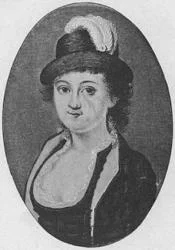
Alois Liechtenstein
Prince Alois of Liechtenstein (1869–1955), born Aloys Gonzaga Maria Adolf, was a member of the House of Liechtenstein and an officer in the Austro-Hungarian Army. He never ruled the principality. Instead, his significance to its history came through his place in the succession: in 1923 he gave up his claim in favor of his eldest son, Franz Joseph, who later became Prince Franz Joseph II and reigned from 1938 to 1989.
Family and early years
Alois was born at Hollenegg Castle in Styria, then part of Austria-Hungary. He was a son of Prince Alfred of Liechtenstein and Princess Henriette, a daughter of Prince Alois II. He grew up in a large aristocratic family and attended Vienna’s Schottengymnasium before pursuing a military career.
Alois served as an officer in the Austro-Hungarian Army, including in the Uhlan Regiment No. 12. During the First World War he served in the reserve and rose to lieutenant colonel. His life was shaped by the political transformations of the period, as the Habsburg monarchy gave way to new states and the Liechtenstein princely family reconsidered its relationship with its small Alpine principality.
Marriage and the Liechtenstein connection
In April 1903 Alois married Archduchess Elisabeth Amalie of Austria, a niece of Emperor Franz Joseph I. Under the rules of the time, she was not expected to marry an Austrian subject. Alois therefore relinquished his Austrian citizenship and became a citizen of Vaduz in 1902, a step that also formally tied him to Liechtenstein.
The couple had eight children, including their eldest son Franz Joseph. They lived for many years at Gross-Ullersdorf, an estate in Moravia that Alois inherited. The family’s ties to Austria and its lands remained close even as its legal and dynastic connection to Liechtenstein became more important.
Succession and later life
Alois was among the people in line to inherit the Liechtenstein princely title, but he did not seek to become head of state. On 26 February 1923 he renounced his succession rights and the family majorat in favor of Franz Joseph. The decision opened the way for his son to become heir; after the deaths of reigning Prince Johann II and his successor Franz I, Franz Joseph took the throne as Franz Joseph II in 1938.
In 1944, as the Second World War reached its final years, Alois and Elisabeth Amalie moved to Vaduz. It was a significant change for a family that had long lived on its estates beyond Liechtenstein’s borders. Alois died there on 16 March 1955, aged 85. His wife remained in Vaduz until her death in 1960.
Legacy
Alois’s public life was quieter than that of his son, whose long reign brought the princely house into a new era. Yet his decision to step aside had lasting consequences for the succession and for the House of Liechtenstein. By relinquishing his own claim, he ensured that the next generation—not he himself—would assume the principality’s leadership.