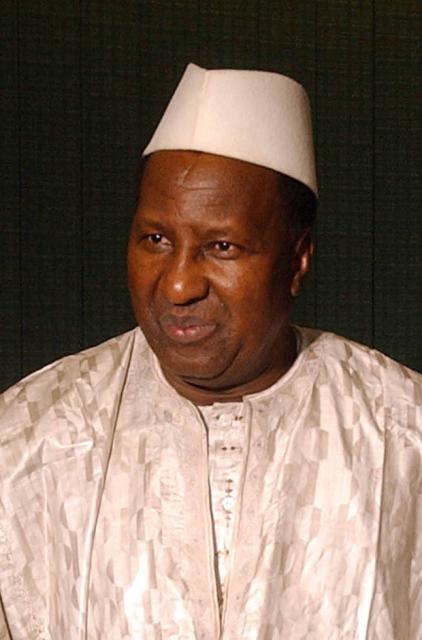
Alpha Konare
 Mali
Mali- Alpha Oumar Konaré: President of Mali
- Early Career and Political Ascension
- Tuareg Rebellion and Administrative Reforms
- Foreign Policy and the African Union
- End of Presidency and Legacy
Alpha Oumar Konaré: President of Mali
Alpha Oumar Konaré served as the President of Mali from June 8, 1992, to June 8, 2002. Prior to his presidency, he held various positions in the Malian government and international organizations.
Early Career and Political Ascension
Konaré began his political career in 1978 as the Minister of Youth, Sports, Arts, and Culture. From 1981 to 1992, he worked as a consultant for UNESCO and the United Nations Development Program. In 1992, he was elected president by the military government led by Amadou Toumani Toure.
Tuareg Rebellion and Administrative Reforms
During Konaré's first term, Mali faced a rebellion by Tuareg separatists in the northern part of the country. Backed by Libya, the rebels clashed with government forces and local militias. In 1996, negotiations resulted in a peace agreement, promising humanitarian aid and economic benefits to the Tuaregs. However, these promises were not fully realized, leading to further Tuareg uprisings.
Inspired by the Tuareg rebellion, Konaré initiated administrative reforms that established 682 new communal units, known as "communes" or "districts." These units were granted local authority over land use, education, healthcare, and transportation.
Foreign Policy and the African Union
Konaré played an active role in regional and international affairs. From 1999 to 2001, he served as the Chairman of the Economic Community of West African States (ECOWAS). In 2003, he was elected as the Chairperson of the African Union Commission, a position he held until 2008.
End of Presidency and Legacy
In 2001, Konaré proposed amending the constitution to allow him to run for a third term, but this was rejected. He stepped down as president in 2002 and was succeeded by Amadou Toumani Toure.
Konaré is remembered for his efforts to promote democracy and decentralization in Mali, as well as his contributions to regional and continental integration through his work with ECOWAS and the African Union. However, his presidency was also marked by challenges, including the ongoing Tuareg conflict and economic difficulties.