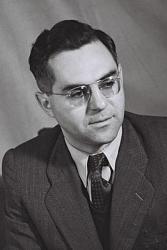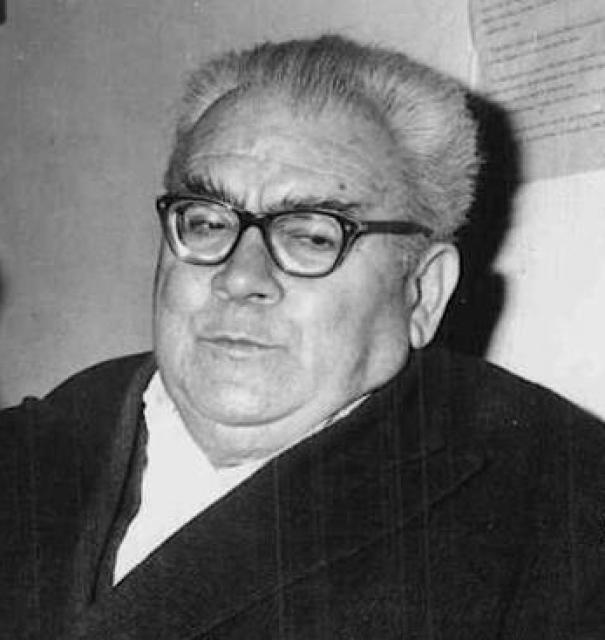
Amadeo Bordiga
 Italy
Italy- Amadeo Bordiga: A Revolutionary Stalwart
- Opposition to Reformism and War
- Founding the Communist Party of Italy
- Imprisonment and Exile
- Return to Politics and Internationalist Communist Party
- Legacy and Impact
Amadeo Bordiga: A Revolutionary Stalwart
Early Life and Socialist ActivismAmadeo Bordiga, born in Resina, Italy in 1889, emerged as a prominent political figure in early 20th century Italy. His political awakening began in 1907 when he joined socialist organizations in Naples. In 1910, he became a member of the Italian Socialist Party.
Opposition to Reformism and War
Bordiga's political views were shaped by his staunch opposition to reformism within the Italian Socialist Party. In 1912, he established the Karl Marx Study Circle in Naples to combat these tendencies. He actively campaigned against militarism and the Italo-Turkish War in Libya through his writings in the newspaper "L'Avanguardia."
Founding the Communist Party of Italy
During World War I, Bordiga and his fellow "intransigents" vehemently opposed the Italian Socialist Party's neutral stance. In 1918, he founded the newspaper "Il Soviet" to advocate for the establishment of a new party. At the party's 15th Congress in 1918, Bordiga supported Lenin's theses on international revolution.
At the Italian Socialist Party's Livorno Congress in 1921, Bordiga's faction split from the party and established the Communist Party of Italy (PCI). He played a pivotal role in organizing the party's trade union and underground military networks.
Imprisonment and Exile
Bordiga's revolutionary activities drew the attention of the fascist regime. He was arrested and sentenced to a three-year exile in 1926. During this period, he organized an educational program for political prisoners and lectured on academic subjects alongside Antonio Gramsci.
Return to Politics and Internationalist Communist Party
Upon his return from exile, Bordiga was expelled from the PCI in 1930 on charges of Trotskyist factionalism. He withdrew from active political involvement, but continued to write under pseudonyms, primarily in the magazine "Prometeo."
In the 1950s, a split occurred within the PCI, leading to the formation of the International Communist Party (ICP). Bordiga's faction, which remained loyal to his "internationalist" principles, became known as the ICP.
Legacy and Impact
Amadeo Bordiga remains a significant figure in Italian political history. His uncompromising revolutionary beliefs and opposition to reformism left a profound impact on the development of the Communist movement. Through his writings and activism, Bordiga contributed to the formation of a distinct political current within the international left.