Amanda Liberty
 Great Britain
Amanda Liberty became known internationally through a series of candid television and newspaper interviews about her self-described attraction to inanimate objects. Her story—especially her public engagement to a vintage chandelier—made her an unlikely tabloid headline, but she has used that attention to explain an experience she says is deeply personal and not a joke.
A Personal Connection to Objects
Liberty, who is from Leeds, has said that her feelings for objects began in adolescence, when she developed an attachment to a drum kit. Later, she became strongly attached to the Statue of Liberty in New York. She changed her surname to “Liberty” by deed poll, describing the change as a way to honor that relationship.
She has described her attraction as objectum sexuality, a term used by some people who form romantic or sexual attachments to objects. Liberty has emphasized that she experiences these feelings as part of who she is. Her public interviews have often focused on how she wants people to listen without ridicule, even if they do not share or understand her experience.
Lumiere and the Public Spotlight
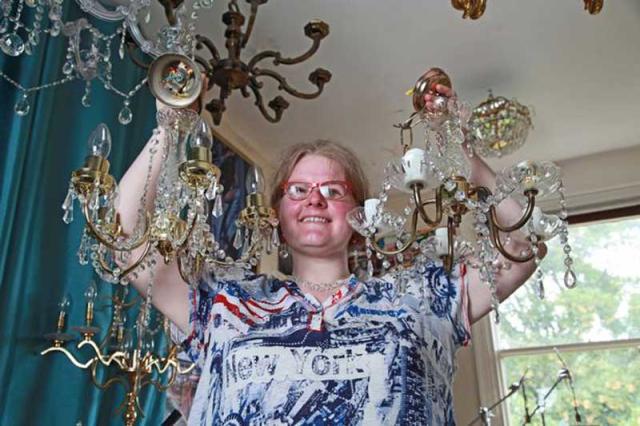
In 2016, Liberty found a vintage chandelier for sale online and named it Lumiere. She has described feeling an immediate connection when she saw it. In 2017, she publicly proposed to the chandelier and later spoke about hoping to hold a commitment ceremony. Media coverage sometimes compressed this into the claim that she would legally marry it; civil marriage law does not recognize a human-object union.
Lumiere is part of a wider collection of light fixtures that Liberty says she cares for. She has discussed the practical side of her attachments as well as the emotional one, explaining that objects can feel beautiful, comforting and full of character to her.
Speaking for Herself
Liberty’s public profile has largely come through television features and interviews rather than a conventional entertainment career. She has appeared in documentaries and programs about relationships, using those platforms to describe her life in her own terms and challenge assumptions about what people consider a relationship.
Her story has also attracted controversy, including a dispute with a newspaper over a column about her attraction to objects. The coverage illustrates how quickly a personal account can become a sensational headline. Liberty’s lasting message has been simpler: she wants her feelings treated with respect, even when they fall outside familiar ideas of romance.