Andre Obrecht
 France
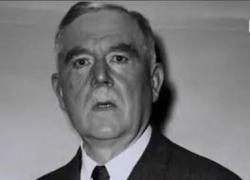
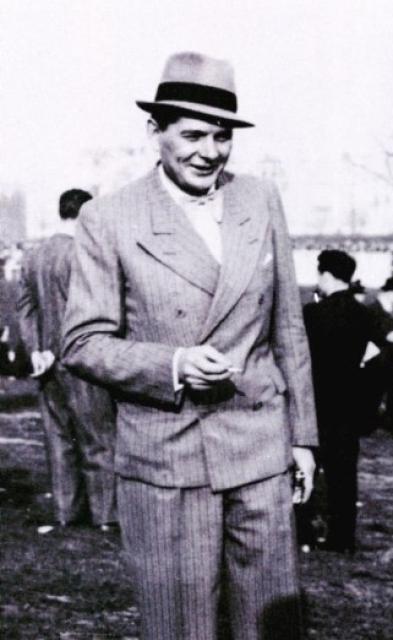
Biography of André Obrecht
André Obrecht was born in Paris on August 9, 1899. He was the nephew of the senior executioner Anatole Deibler. At the age of ten, André discovered his uncle's profession by looking at postcards that depicted various executions. After the death of his own son, Deibler developed a paternal bond with André, which lasted throughout their lives.
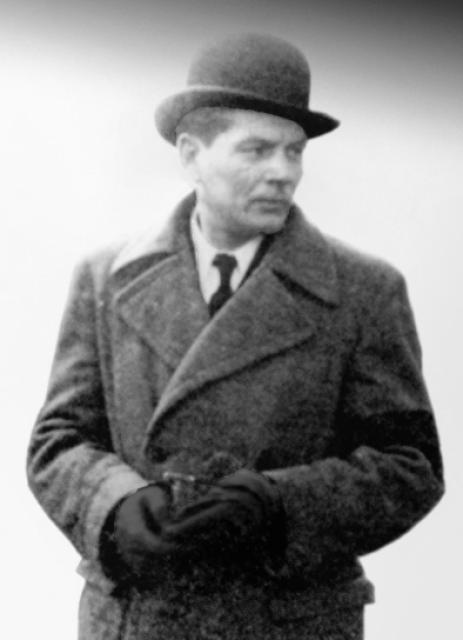
At the age of 22, on April 4, 1922, André joined the team of executioners as a second assistant. He had to combine this role with his job as a factory worker during the day. André served as a second assistant until 1939 when his uncle Anatole Deibler passed away suddenly due to a heart attack while rushing to perform the 401st execution.
Following Deibler's death, his widow, despite her late husband's preference for André to succeed him, appointed Jules-Henri Desfourneaux, André's cousin, as the new chief executioner. André became Desfourneaux's first assistant. However, André and Jules-Henri did not get along and had frequent disagreements. André believed that Jules-Henri was too slow and poorly organized.
In 1943, after the executions of French Resistance fighters, André and his friends, the Martin brothers, left their positions as executioners. André returned to his duties in 1945 but his animosity towards his cousin grew stronger. After a heated argument following an execution in 1947, André decided to leave the profession once again.
After Jules-Henri Desfourneaux's death in 1951, André wrote a letter to the Ministry of Justice proposing himself as the chief executioner. His request was accepted, and on November 1, 1951, André officially assumed the position. On November 13, he performed his first beheading as the master executioner in Marseille, executing Marcel Ythier, a police killer.
As the years passed, the number of death sentences decreased. In the early 1970s, André was diagnosed with Parkinson's disease, but it did not prevent him from carrying out four more executions. On November 28, 1972, he executed Roger Bontems and Claude Buffet in Paris for the murder of a nurse and a prison warden. On May 12, 1973, he executed Ali Benyanès in Marseille for the murder of an eight-year-old girl during a robbery. Finally, on July 28, 1976, he executed Christian Ranucci in Marseille for the kidnapping and murder of a young girl. It is still debated whether Ranucci was innocent.
On September 30, 1976, André retired, and his nephew Marcel Chevalier, who had been his assistant since 1958, took over as the chief executioner. André passed away on July 30, 1985, in a hospital in Nice. Four years later, journalist Jean Ker, who had interviewed André multiple times, released a book titled "Le Carnet Noir du Bourreau" (The Black Diary of the Executioner), which contained André's biography and memoirs. André was remembered as a seemingly normal person, with a strong affinity for women and a respected authority in his profession, which caused him to be lonelier than most.
In his memoirs, André wrote, "An executioner is a profession that forces a person to fulfill their duties, even if they are horrified by the exact understanding of their actions. In those moments, one must force oneself to believe that their hand is not their own, but merely a movement. My head is not my own, it simply obeys that movement, and the rope that holds the guillotine's blade is the salvation of truth. The executioner and the state are intrinsically linked. They both contribute to the cohesion of society."