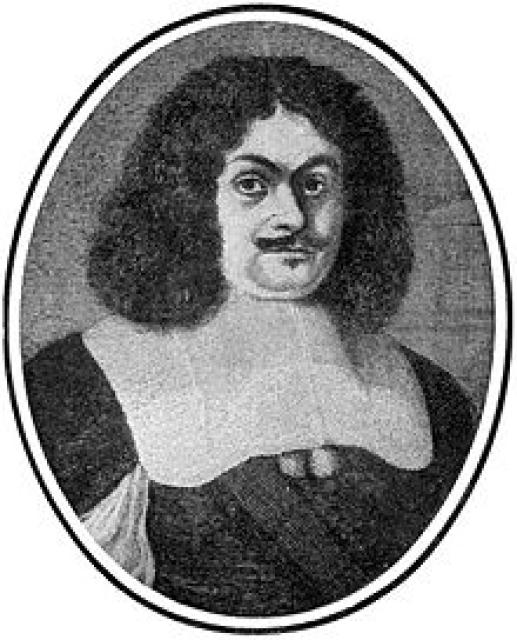
Andreas Gryphius
 Germany
Biography of Andreas Gryphius
Andreas Gryphius was a German poet and playwright, born on October 11, 1616, in Glogau, Silesia (now Glogow, Poland). Orphaned at a young age, he managed to prepare for university by giving private lessons. At the age of 19, Gryphius became the tutor of the children of Imperial Chancellor Philipp Schönborn. It seems that the young Gryphius impressed the wealthy nobleman, as he soon advanced him to the position of poet laureate and promised to pay for his education. However, a few months after this, the chancellor passed away. Nevertheless, Gryphius was able to enter the University of Leiden as a companion to three young noblemen. After studying there for three years, he began lecturing in his fourth year. From Leiden, accompanied by another young student, he traveled to Paris, where he gained access to Cardinal Richelieu's library. After living in France for a year and a half, he went to Italy, visiting Florence and Rome, before returning to Germany. In Strasbourg, he wrote his first play, "Leo Armenius."
After the end of the Thirty Years' War in 1648, Gryphius returned to Silesia. After getting married, he held a highly prestigious position as the syndic of Glogau. Gryphius passed away in Glogau on July 16, 1664. He is best known for his three comedies: "Die geliebte Dornrose" (The Beloved Thorn Rose), written in the Silesian dialect, which humorously portrays the amorous adventures of peasants; "Herr Peter Squentz," which mocks the absurd theatrical attempts of craftsmen; and "Horribilicribrifax," a parody of the boastful warrior in Plautus' plays. Gryphius also wrote several tragedies, including "Katharina von Georgien," "Felicitas," and "Carolus Stuardus."
In the early 20th century, Gryphius' reputation as a lyric poet was revived. He began writing sonnets in his youth, and in 1637, a small book was published containing 31 sonnets and poems in German and Latin.


