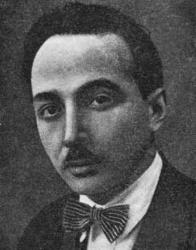
Konstantin Kondrya
- Early Life and Education
- Literary Career
- Theatrical Works
- Other Works
- Translations
- Later Years and Legacy
Early Life and Education
Constantin Condru, a renowned Moldovan poet, playwright, satirist, and translator, was born in the town of Дорохой, Romania in 1920. Raised in Ploeşti, he completed his secondary education at the Cultura High School in Bucharest. Following the annexation of Bessarabia by the Soviet Union in 1940, he relocated to Chişinău. In 1945, he graduated from the Ion Creangă State Pedagogical Institute.
Literary Career
Condru's literary career began with the publication of his poetry collection, "Tinereţe" (Youth), in 1949. This was followed by numerous other collections and a volume of selected poems, "Versuri" (Poems), in 1958. Throughout the 1950s, 60s, and 70s, he published humorous poems and essays in both Moldovan and Russian.
Theatrical Works
Condru made his debut as a playwright in 1957 with the historical drama "Zile de cumpănă" (Days of Trial), translated into Russian as "Lihaya Godina" (Fierce Time). His lyrical comedy "Flori de câmp" (Field Flowers) was published in 1960, followed by the comedy "Children and Apples" (1971) in Russian and "Copii şi merele" (1961) in Moldovan. Other notable plays include "The Man from Valencia" and "Even After a Hundred Years..."
Other Works
Condru also authored children's literature and a book on the origins of winged words in ancient Greek mythology. He collaborated on screenplays for films such as "Przy próbie ucieczki" (1965), "Nunta palatului" (1969), and "Dmitrie Cantemir" (1971). Additionally, he created the script for the animated film "Portofelul cu banii" (1970).
Translations
Constantin Condru played a significant role in translating foreign works into Moldovan. Notable translations include Molière's "Comedies," Shakespeare's "Tragedies," Thomas Mann's "Buddenbrooks," and Alexandre Dumas's "The Three Musketeers."
Later Years and Legacy
From 1979, Condru became a dissident, leading to his expulsion from the Moldavian Writers' Union and dismissal from his job. He continued his translations with the assistance of literary acquaintances and published essays in Russian-language American newspapers. In 1988, he settled in Seattle, where he continued to write and contribute to the local literary community.