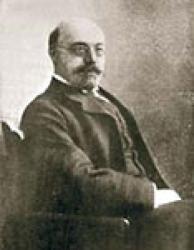
Andrew Carnegie
 USA
USA- Biography of Andrew Carnegie
- Early Career and Wealth Accumulation
- Expansion into Steel Industry
- Philanthropy
- Legacy
Biography of Andrew Carnegie
Andrew Carnegie was an American industrialist, also known as the "Steel Magnate," and philanthropist. He was born into a relatively prosperous family in 19th-century Scotland, but due to the decline of his father's textile business, his mother had to support the family by making shoes. Despite the financial struggles, Carnegie's mother managed to provide him and his brother with basic education. In 1845, the family immigrated to the United States and settled in Allegheny, Pennsylvania.
Early Career and Wealth Accumulation
At a young age, Carnegie worked as a telegraph messenger and quickly rose through the ranks due to his exceptional skills. By the age of 16, he became one of the few telegraph operators in America who could decipher telegrams aloud. With his earnings, Carnegie invested in stocks and gradually built his wealth. He eventually became a personal telegraph operator for Thomas Scott, the superintendent of the Pennsylvania Railroad. Carnegie continued to invest in various industries, including banking, bridge construction, and oil, which further increased his fortune.
Expansion into Steel Industry
In the 1870s, Carnegie focused his attention on the steel industry. He acquired and transformed old ironworks into steel mills. Within a few years, he gained control over a significant portion of the steel and iron production in the United States. However, his labor practices, including long working hours and lack of breaks, led to a major strike at his Homestead Steel Works, which became one of the largest strikes in the country's history.
Philanthropy
After retiring from business, Carnegie dedicated himself to philanthropy. He believed in the concept of "the Gospel of Wealth," which meant that individuals should accumulate wealth in the first part of their lives and then give it away in the latter part. Carnegie expressed his ideas in an article titled "The Gospel of Wealth" in 1889. He primarily invested in libraries, as he recognized the importance of education. Carnegie built over 2,800 libraries, which now serve 40% of the American population. He also contributed to the construction of concert halls, scientific and educational centers, and supported students and teachers.
Legacy
Carnegie's passion for philanthropy led to the establishment of various foundations and organizations. He created the Carnegie Hero Fund for individuals who sacrificed their lives in peacetime, founded the Carnegie Corporation of New York, and built the Peace Palace in The Hague. Despite his immense wealth, Carnegie left a relatively small inheritance to his heirs, as he believed in the importance of giving back to society. Andrew Carnegie passed away in his ancestral home, Skibo Castle, in Scotland.