Nikolay Holodnuy
 Ukraine
Biography of Nikolay Kholodny
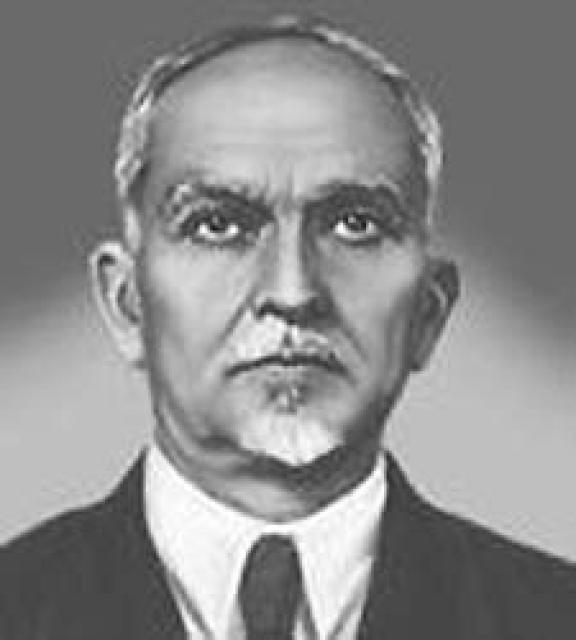
Nikolay Grigoryevich Kholodny was a Russian and Soviet biologist, known for his work in the field of plant physiology, anatomy, and ecology, as well as microbiology and soil science. He was the creator of the anthropocosmic theory and developed the phytohormonal theory of tropisms, also known as the Kholodny-Vent theory.
Early Life and Education
Nikolay Grigoryevich Kholodny was born on June 22, 1882, in Tambov, in the family of a teacher at the local boys' gymnasium. In 1886, the Kholodny family moved to Voronezh. In 1892, he entered the Voronezh gymnasium, but only studied there for one year. In 1893, his father was transferred to Novocherkassk as the director of a gymnasium. It was here that Nikolay continued his education. During his time in gymnasium, Nikolay Grigoryevich Kholodny developed an interest in natural sciences, spending his free time reading scientific literature and observing nature. After graduating from gymnasium in 1900, he enrolled in the Department of Natural Sciences at the Faculty of Physics and Mathematics at Kiev University. During his third year, he chose plant physiology as his specialty, while also studying the history of philosophy. After completing his university studies in 1907, he was appointed as an assistant at the Department of Plant Physiology.
Career and Contributions
In 1919, Kholodny defended his master's dissertation on the influence of metallic ions on the irritability processes in plants at Kiev University. That same year, he was awarded the title of professor at the Kyiv Higher Women's Courses, where he had been teaching botany since 1914. In 1919, he started working at the Dnieper Biological Station "Horistoe," where he conducted over 40 scientific studies on various topics. He also served as the head of the Department of Plant Physiology at Kiev University, teaching physiology, plant anatomy, and microbiology.
In 1920, Kholodny became a research associate at the Ukrainian Academy of Sciences. In 1926, he was awarded a doctorate in botany without defending a dissertation for his monograph on iron bacteria. The monograph received high praise from prominent Russian microbiologists, including S. N. Winogradsky, V. L. Omeliansky, and D. K. Zabolotny. In 1925, he was elected a corresponding member of the Ukrainian Academy of Sciences, and from June 29, 1929, he became a full member in the field of agricultural sciences.
During World War II, Kholodny worked at the All-Union Scientific Research Institute of Tobacco in Krasnodar, then in the dendrological garden and experimental station of the USSR People's Commissariat of Agriculture in Sochi. From 1942, he worked in Yerevan and the Kirovokan branch of the Yerevan Botanical Garden, where he continued his experimental work. In 1945, he returned to Kiev, but during the occupation years, all of his manuscripts, correspondence, and a large collection of specimens were lost.
In the post-war years, Kholodny would spend his winters in Sochi due to his poor health, conducting extensive scientific research at "Horistoe" during the summers. He continued to lead excursions and experiments in nature. In 1953, his heart condition worsened, and he passed away on May 4, 1953, in Kiev.
Kholodny left behind more than 200 scientific works, most of which are related to plant physiology. Additionally, he made significant contributions to the study of plant ecology, microbiology, and soil science. He developed new methods for assessing the quantity of soil bacteria and researched general biological questions concerning the origin of life on Earth, evolutionary theory, and the history of science.
His most significant contributions include the development of the phytohormonal theory of tropisms, which explains the growth movements of plants. He also conducted experiments on the artificial stimulation of plant development, which is widely used in agricultural practice worldwide. His research on the morphology and physiology of iron bacteria was highly valued. Furthermore, he conducted ecological and soil science studies and proposed new methods for studying soil bacteria.
Kholodny's research on tropisms in plants played a crucial role in shaping his main research direction. His initial work on geotropism led to the development of the physical-chemical theory, which he considered a useful working hypothesis. He later extended his theories to phototropism. Almost simultaneously and independently from Kholodny, Dutch phytophysiologist Frits W. Went proposed similar ideas and experimental data. This hypothesis is now known as the Kholodny-Went hypothesis and gained recognition among most phytophysiologists, gradually developing into the hormonal theory of tropisms.
Kholodny's work laid the foundation for the study of plant hormones and made significant contributions to the understanding of phytohormonal phenomena. His monograph "Phytohormones" (1939) summarized his extensive research on the subject. He also made important contributions to the study of volatile organic compounds in the atmosphere and their biological role. His studies demonstrated that these compounds are not dispersed without a trace but are absorbed by the soil and utilized by its microbial population. This discovery revealed another link in the complex chain of substance circulation in the biosphere.
Kholodny's extensive research on the atmospheric environment expanded our knowledge of phytogenic and other organic components in the atmosphere. He proved that these substances can be assimilated by various soil microorganisms and serve as an additional source of carbon nutrition under certain conditions. His work also contributed to the development of methodologies for studying soil and aquatic microbial populations and the advancement of ecological microbiology. He had original ideas on the abiotic formation of organic substances on Earth and enriched various areas of modern biology with his experimental material and innovative ideas.
Kholodny's contributions to science were widely recognized, and he was awarded the Order of Lenin for his achievements. In 1971, the Institute of Botany of the Ukrainian Academy of Sciences was named after him. In 1972, the M.G. Kholodny Prize was established by the Academy of Sciences of Ukraine, which is awarded for outstanding work in the field of botany and plant physiology.