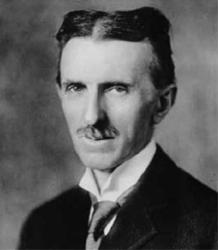
Andrey Goncharenko
 Belarus
Early Life and Education
Alexander Markovich Goncharenko was born in the village of Versonka, Krupki District, Minsk Oblast, Belarus, to a peasant family. He graduated from high school in 1951 and enrolled in the Faculty of Physics and Mathematics at Belarusian State University (BSU). He graduated with honors in 1956 and was recommended for postgraduate studies at the Institute of Physics of the Belarusian Academy of Sciences (BAS).
Academic and Research Career
Since 1956, Goncharenko has been working at the Institute of Physics of BAS. From 1970, he served as Deputy Director for Scientific Work and head of the Mogilev branch of the institute. In 1982, he became head of the laboratory.
In 1987, Goncharenko was elected Chief Scientific Secretary of the BAS (until 1997) and returned to Minsk. From 1991 to 2004, he also headed the Department of Optical Problems of Informatics at the National Academy of Sciences of Belarus.
Since 2004, Goncharenko has been head of the Laboratory of Optical Problems of Informatics at the Stepanov Institute of Physics of the National Academy of Sciences of Belarus.
He has delivered lecture courses to students at Moscow State University, BSU, Gomel State University, Mogilev Pedagogical Institute, and Mogilev Machine-Building Institute. Under his supervision, 17 PhD and 10 doctoral dissertations have been defended. He is also a member of the editorial boards of several scientific journals.
Research Interests
Goncharenko's research focuses on physical and integrated optics, as well as quantum electronics. He has extensively studied the properties of circular optical axes of absorbing crystals and crystalline plates, refractive index surfaces, and absorption coefficients.
He has constructed a theory of anisotropic dielectric waveguides and optical fibers, identified the influence of anisotropy on wave types, energy localization, and cutoff frequencies of waveguides, and thoroughly examined isotropic and crystalline planar waveguides of integrated optics, attenuation, and amplification of light in thin-film waveguides. He has also investigated the waveguide properties of inhomogeneous thin-film layers and determined the characteristics of the eigenmodes of an inhomogeneous optical fiber.
Furthermore, Goncharenko has studied the peculiarities of wave amplification in them, producing high-quality optical waveguides and fibers. He has also proposed a new class of organic compounds promising for waveguide development.
After the advent of lasers, a need arose for a cohesive theory of the propagation of powerful light beams in various environments. Goncharenko has addressed these issues, analyzing the propagation of Gaussian elliptical beams in lens-like anisotropic and inhomogeneously active media.
Current Research
Goncharenko and his colleagues are currently engaged in developing algorithms for parallel digital processing and transmission of information by purely optical methods, designing new principles for the creation of corresponding integrated-optical systems, and investigating promising nonlinear nanocomposite materials. Of particular interest are studies dedicated to the propagation of solitons in nonlinear media.