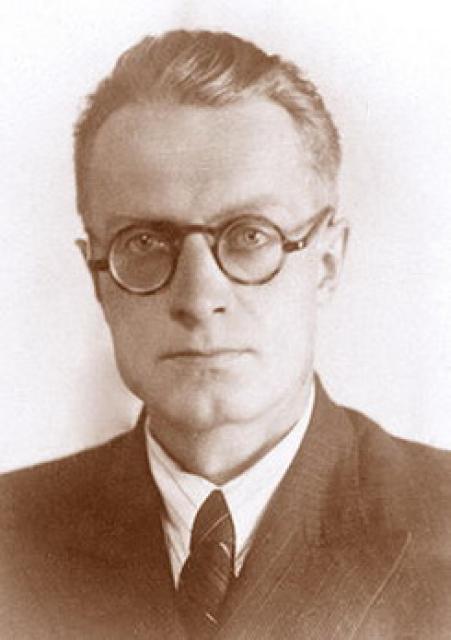
Andrey Gulyaev
- Early Life and Education
- Medical Career
- Clinical Surgeon and Educator
- Academic Leadership and Scientific Contributions
- Awards and Honors
- Legacy and Influence
Early Life and Education
Andrei Vladimirovich Gulayevwas born into a family of medical professionals on January 25, 1901, in Smolensk, Russia. His father, Vladimir Avenirovich, was a forester, and his mother, Elizaveta Konstantinovna, was a pediatrician. Gulayev had three sisters: Valentina, Olga, and Elizaveta.
In 1917, Gulayev began his studies at the Smolensk Gymnasium. After completing his secondary education, he spent 1.5 years studying at a workers' college. In 1920, he enrolled in the newly established medical faculty at Smolensk University.
Medical Career
In 1922, Gulayev transferred to the medical faculty of the 2nd Moscow University (now known as the Russian National Research Medical University named after N.I. Pirogov). In 1925, he completed his clinical residency in surgery under the guidance of Professor Boris Solomonovich Veisbord.
Gulayev continued his medical training as a postgraduate student at the department of surgical faculty at the same university, under the supervision of Professor Sergei Ivanovich Spasooukotsky. After graduating from his residency, he worked for two years in Magnitogorsk, where he served as head of the surgical department of the Central Magnitogorsk Hospital, head of the polyclinic, and head of the traumatology sector of the Institute of Socialist Health.
Clinical Surgeon and Educator
In 1933, Gulayev returned to Moscow and resumed his work in the department of surgical faculty at the 2nd Moscow Medical Institute. In 1935, he obtained his doctorate in medical sciences. In 1937, he became an associate professor.
During World War II (1941-1945), Gulayev served as head of the surgical department of an evacuation hospital and later as head of the Central Clinical Sanatorium of the USSR Armed Forces. His organizational skills and surgical expertise were essential in establishing and leading a large surgical ward.
After the war, Gulayev returned to the department of surgical faculty at the 2nd Moscow Medical Institute, where he held various leadership positions and made significant contributions to medical research and education.
Academic Leadership and Scientific Contributions
In 1952, Gulayev became head of the department of hospital surgery (later known as the department of surgical diseases) at the pediatric faculty of the 2nd Moscow Medical Institute. He held this position until 1976.
Gulayev's leadership played a pivotal role in advancing the department's scientific endeavors. His team conducted pioneering research in cardiac and pulmonary surgery, including the first successful intracardiac intervention in the Soviet Union (1952). He was also instrumental in developing surgical treatments for acquired heart defects.
Another focus of Gulayev's research was on liver, biliary tract, and pancreatic surgery. His work in this area was published in numerous papers, articles, and books, including the influential collection "Specific Issues in the Surgery of Extrahepatic Bile Ducts and Pancreas" (1969).
Awards and Honors
Gulayev received numerous awards and honors throughout his career, including the Order of Lenin, the Order of the Red Banner of Labour, and the Order of the Red Star. He was a member of several prestigious medical societies, including the All-Russian Society of Surgeons and the International Society of Surgeons.
Legacy and Influence
Gulayev's exceptional contributions to surgery and medical education left a lasting legacy. He was a respected and influential figure in the field, known for his surgical skill, scientific curiosity, and dedication to teaching. He passed away on April 19, 1984, leaving behind a wealth of knowledge and a legacy of innovation in the medical profession.



