Andrey Kryachkov
- Early Life and Education
- Career in Tomsk
- Architectural Style and Influences
- Recognition and Awards
- Later Career
- Legacy
Early Life and Education
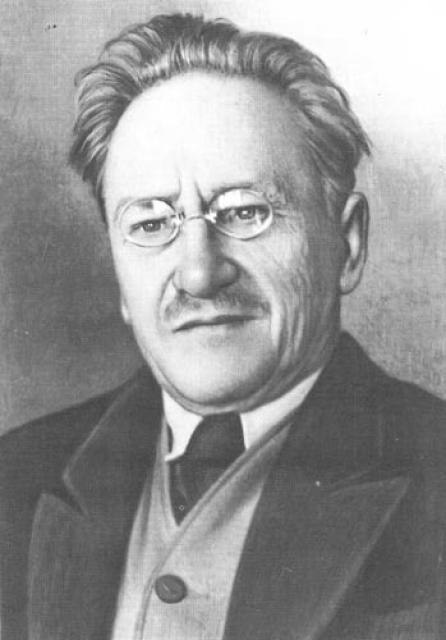
Andrei Dmitrievich Kryachkov was born on November 24, 1876, in the village of Vakhrevo, Yaroslavl Governorate. At the age of six, he lost his father and was raised by his grandfather. In 1888, he graduated from a three-year school and was sent to Vyborg to live with his uncle. His uncle arranged for him to work in a tobacco factory. In 1890, he enrolled in the Vyborg Real School, where he excelled in Swedish and Finnish languages. In 1896, he graduated from the school.
In 1897, Kryachkov entered the Institute of Civil Engineers in St. Petersburg. During his studies, he received practical experience in various regions of Russia, including the Volga region, Crimea, and the Caucasus. He served as an assistant to architects N. V. Dmitriev and F. S. Kharlamov. After completing his studies, he was awarded the title of Civil Engineer and the rank of Collegiate Secretary.
Career in Tomsk
In 1902, Kryachkov accepted a position as Junior Engineer in the Construction Department of the Tomsk Governorate. He was soon appointed Temporary Provincial Architect. Kryachkov also taught architectural design and drawing at the Tomsk Technological Institute. In 1905, he became the Architect of the Western Siberian Educational District, as well as the Architect of Tomsk University and Tomsk Technological Institute.
During this period, Kryachkov designed and oversaw the construction of several buildings, including hospital clinics, anatomical and bacteriological institutes, and buildings for the technological institute. He also worked on the construction of Tomsk University and the Sibiryakov Building, which is considered a landmark of Tomsk.
Architectural Style and Influences
Kryachkov's architectural style evolved over his career. In his early period, he incorporated elements of Art Nouveau. Later, he focused on developing a more constructivist style. Despite his contributions to Siberian architecture, he was criticized for not fully embracing modernist principles.
Recognition and Awards
In 1920, Kryachkov was awarded the title of Professor. His projects were exhibited at the World Exhibition in Paris in 1937, where they received the Grand Prix and the Gold Medal.
Later Career
From 1924 to 1936, Kryachkov worked in the construction commissions of various government agencies in Western Siberia. He continued to teach at the Tomsk Technological Institute and the Siberian Construction Institute in Novosibirsk. In 1934, he became the head of the Novosibirsk branch of the Union of Architects of the USSR.
Legacy
Andrei Dmitrievich Kryachkov passed away on August 25, 1950, in Sochi. He left behind a legacy of over 100 buildings and structures, many of which are protected as historical and cultural monuments. His designs have had a significant impact on the architectural landscape of Siberia.