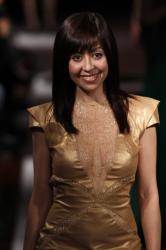
Angele Delanghe
 Great Britain
Biography of Angela Delang
Belgian fashion designer Angela Delanghe (Angele Delang) was a Belgian fashion designer who worked in London and managed her own fashion label from the late 1930s to the mid-1960s. Angela Delang was born in Belgium and passed away in Austria, but the majority of her life was spent in Britain. It was in Britain where Angela gained fame and became one of the country's most prominent designers, and it was here that she faced the challenges of the fashion industry crisis.
Early Life and Career
Angela Delang was born in Belgium and settled in Britain in 1914, during the early days of World War I. She moved to another country not so much by choice, but rather to escape the war. As a refugee, Angela was able to establish herself well in her new home, and in England, she made her debut as a designer. She presented her first collection to the public in 1939. The war caused London's fashion houses to forget about their activities, but the fashion industry as a whole refused to die, and the "vacant spots" that appeared were perfect for talented professionals like Delang. It quickly became evident that Angela deserved to be taken seriously, and among her fans were well-known individuals such as Audrey Withers, the editor of British fashion publication Vogue. Angela Delang was one of the first members of the Incorporated Society of London Fashion Designers. She joined the society in 1945, but had to leave in 1947 due to financial problems.
Signature Style
Angela Delang became famous primarily for her distinctive approach to fashion design, creating surprisingly soft and feminine outfits. She was particularly skilled at designing romantic evening gowns and wedding dresses. At a fashion show in January 1947, Delang presented a series of unique evening dresses, constructed using various ruffles, brocade, and stiff edging. Interestingly, alongside Angela, her colleague from the Society, Charles Creed, also exhibited his work. Delang's designs were well-received by the public, and in 1948, a fashion critic from The Times noted that Angela catered to three "Balzac types" - unmarried girls, 30-year-old women, and "women of the world". By 1949, Delang was already collaborating with Fortnum & Mason. Despite leaving the society, her work continued to enjoy great success. Angela's new creations often became the focus of magazine and newspaper reviews of new fashion shows. In 1949, Delang presented a unique collection of lightweight wool suits with soft silhouettes, narrow waists, and pleated skirts. For the spring 1950 fashion show, Angela created a series of garments made from lightweight tweed and worsted fabrics, cotton, and linen, which proved to be practical and vibrant.
Later Years and Legacy
The exhibition hall on Bruton Street continued to attract new clients for Delang, and she regularly advertised her new collections in special sections of The Times. In 1961, Angela returned to the Society she had previously left, becoming its first new member in 8 years. It is difficult to say how much benefit this brought to Delang, as by that time, nobody doubted her talent. Of course, not all of Angela's projects were unanimously accepted. However, she maintained a high reputation. She was considered a member of the "old guard" of the British fashion world, and her reluctance to abandon familiar design solutions made her seem old-fashioned. Nevertheless, it was still too early to speak of Delang's decline, as even with her traditional approaches, she had much to offer the world. However, new times brought new demands, and it became increasingly difficult for Angela to find models that matched her concept of beauty. In 1966, Delang had to leave the Society once again. It was a challenging period for the entire British high fashion world, with high taxes, declining customer numbers, and the rise of the ready-to-wear industry making life difficult for designers. Even the most talented fashion figures could not count on exceptional success, and unfortunately, everyone's income was greatly reduced, including Delang's.