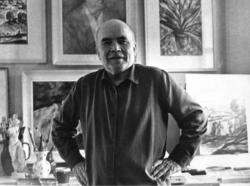
Anna Kavan
 Great Britain
- Biography of Anna Kavan
- Change of Name and Addiction
- Writing Style and Late Works
- Notable Works
- Legacy and Death
Biography of Anna Kavan
Anna Kavan, a British writer and artist, was born Helen Woods in France to British subjects. She grew up as the only child in a well-off but emotionally cold family. Helen was raised by a nanny and had limited contact with her mother, spending no more than ten minutes a day with her. She spent her childhood and youth in Europe and the United States, and briefly lived in Burma after getting married. She was married twice, both marriages ending in divorce. Her only son, Brian, died during World War II, and her daughter Margaret, born in her marriage to Stuart Edmonds, died shortly after birth. The couple later adopted a girl named Suzanna.

Change of Name and Addiction
Her first six works were published under the name Helen Ferguson, her maiden name from her first marriage. However, she later adopted the pseudonym Anna Kavan after the protagonist of her own book, "Let Me Alone," published in 1930. Throughout her adult life, Kavan struggled with a heroin addiction, which she never hid. According to one version, her death was caused by a heroin overdose. This viewpoint was shared by her fellow writer Doris Lessing. However, the official cause of her death was recorded as heart failure. It is known that Anna Kavan made several suicide attempts, particularly after the death of her son.
Writing Style and Late Works
Anna Kavan's prose is often described as experimental, avant-garde, visionary, strange, and reminiscent of Franz Kafka. Many of her works were published after she was hospitalized in a psychiatric clinic, where she was treated for a nervous breakdown caused by her drug addiction and suicide attempts. After leaving the clinic, she officially changed her name to Anna Kavan. Her later works are characterized by a distinct psychological depth. Linguists refer to her creation of a "nocturnal language," a unique vocabulary of dreams, obsessions, and mental instability. She is often compared to writers such as Djuna Barnes, Virginia Woolf, Anaïs Nin, and Kafka.
Notable Works
In 1949, Kavan collaborated with psychoanalyst and friend Karl Theodor Bluth on the novel "The Horse's Tale." One of her most acclaimed works is the phantasmagoric novel "Ice" (1967), which was inspired by her travels to New Zealand during World War II and the icy and inhospitable landscapes of Antarctica. The book brought her critical acclaim and won the Brian Aldiss Award for Best Science Fiction Book.
Legacy and Death
In an interview shortly before her death, Anna Kavan confessed, "I haven't felt anything for twenty years." She passed away on December 5, 1968, at her home in Kensington. Many of her works were published posthumously, with some edited by her friend Rhys Davies. The rights to publish Anna Kavan's works are held by the London law firm Peter Owen Publishers, which continues to reprint her works. The Anna Kavan papers are housed in the Special Collections Department of the McFarlin Library at the University of Tulsa.
British biographer Jeremy Reed wrote a biography of the writer titled "Stranger on Earth: The Life and Work of Anna Kavan," providing a detailed assessment of her life and work. Reed claims that in addition to her addiction to heroin, Kavan had an unhealthy interest in homosexuality and had a relationship with her own psychiatrist.