Anry Bulenvinie
 France
- Biography of Henri de Boulainvilliers
- Historical Contributions
- Scholarly Work
- Contributions to Astrology
- Legacy
Biography of Henri de Boulainvilliers
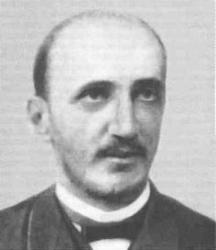
Henri de Boulainvilliers (October 21, 1658 – January 23, 1722) was a French historian, political scientist, and count. He was born in Sen-Ser, France, and passed away in Paris. Boulainvilliers began his scholarly pursuits by studying his ancient family lineage before transitioning to the study of history as a whole. He left behind several manuscripts that were published posthumously by his friends.
Historical Contributions
Boulainvilliers' works focused on the history of medieval France, in which he attempted to provide historical justification for the privileges of the nobility. His most important work, "Historical Memoirs on Former Governments of France," was published in The Hague in 1727. Boulainvilliers was one of the first to recognize the significance of the Frankish conquest of Gaul in the emergence of the French nobility. His ideas found resonance among the aristocracy, as many remembered how absolutism had deprived their ancestors of political power.
Boulainvilliers argued that the nobility was descended from the Franks, the Germanic tribes who conquered Gaul, and therefore had a rightful claim to dominate the descendants of the defeated Gallo-Romans. He defended royal authority and attributed it to the racial foundation of the Franks, considering them as a separate "Frankish race" while regarding other classes as descendants of conquered Gauls and Romans. From this perspective, he derived the historical hereditary rights of the nobility to govern. Boulainvilliers also criticized absolutism, which he believed had deprived the nobility of its dominant position, and opposed the bourgeoisie, who were beginning to demand equal rights for all classes.
Scholarly Work
Boulainvilliers was a prolific author, writing extensively on history, astrology, philosophy (including criticism of Spinoza), theology, and metaphysics. However, the majority of his works were not published during his lifetime. His most significant historical works, "Histoire de l'ancien gouvernement de la France" in three volumes and "Etat de la France," were published after his death in 1727. His astrological works were only published in the 1940s. Boulainvilliers stood apart from other French scholars of the late 17th and early 18th centuries. While most viewed astrology as superstition and an antiquated relic, Boulainvilliers, known for his historical and philosophical contributions, not only engaged in astrology but also enriched the field with his own developments.
Contributions to Astrology
Boulainvilliers was likely the first astrologer to suggest that the Zodiac could be projected onto the Earth and systematically used in astrology. In doing so, he anticipated the developments of Parsons/Sepharial, Friedrich/Grimes, and others in the field of geodetic equivalents. Based on his observations and geographical knowledge, he concluded that the meridian corresponding to the beginning of the sign Aries passed through the Middle East, with the Zodiac moving westward from there. According to Boulainvilliers' system, the geodetic Midheaven for London would be located at 27°45' Gemini, for Edinburgh at 0° Cancer, and for Buenos Aires at 22°00' Leo.
Among his other developments, Boulainvilliers conducted studies in mundane astrology, correlating the movement of the Sun's apogee with the process of historical epochs. His contributions to astrology were significant, earning him recognition and respect within the field.
Legacy
Boulainvilliers' name lives on through the naming of the minor planet (asteroid) 8521 Boulainvilliers. His ideas and writings continue to be studied and discussed, particularly in the fields of history, political science, and astrology.