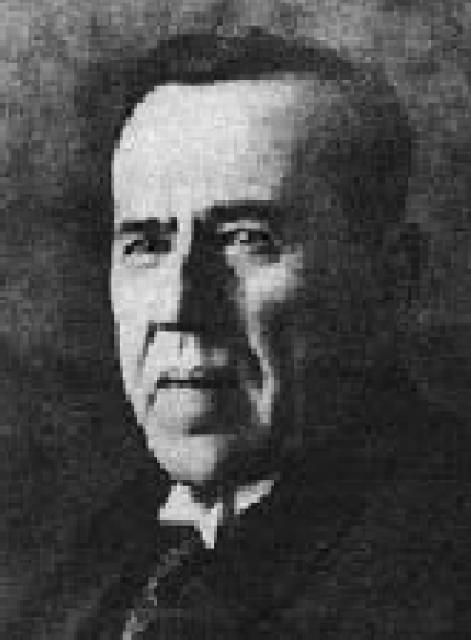
Anthoniy Beskyde
 Czech
Czech- Early Life and Education
- Legal Career
- Political Career in Austria-Hungary
- Pro-Czechoslovak Orientation
- Role in the Paris Peace Conference
- Central Russian People's Council
- губернатор of Subcarpathian Rus
- Later Years
Early Life and Education
Antoniy Beskid was born on December 20, 1855, in Hanihovce, Slovakia. His grandfather, Mykhailo Beskyd, was a renowned ethnographer and publicist. His father, Hryhoriy Beskyd, was a folklorist and historian. Antoniy himself was one of nine children born to a Greek Catholic priest.
He received his secondary education in Levoča, Prešov, and Uzhhorod. In 1874, he began his studies at the academy in Prešov, and in 1879, he graduated with a doctorate in Roman and canon law from the University of Budapest.
Legal Career
From 1883 to 1885, Beskid practiced law in Kežmarok. He then moved to Stará Ľubovňa, where he worked as an attorney until 1906. From 1906 to 1910, he served as a legal consultant for the Greek Catholic diocese in Prešov.
Political Career in Austria-Hungary
Beskid's political career began in 1910 when he was elected to the Hungarian Parliament as a member of the opposition People's Catholic Party. He represented the Spiš region and maintained close ties with Slovak deputies. He also advocated for the construction of a railway line connecting Prešov and Lemkivshchyna to overcome the isolation of those areas.
Pro-Czechoslovak Orientation
After the dissolution of Austria-Hungary, Beskid adopted a pro-Czechoslovak stance. He established the Prešov People's Council in November 1918, neutralizing the influence of pro-Ukrainian political groups.
In December 1918, Beskid's group merged with the "Rusyn Council of Lemkos" to form the "Carpatho-Rusyn People's Council." Initially hoping for the annexation of Carpathian Rus by Russia, the council eventually advocated for the region's incorporation into Czechoslovakia.
Role in the Paris Peace Conference
In January 1919, Beskid was part of the Czechoslovak delegation to the Paris Peace Conference. President Tomáš Masaryk pledged to grant autonomy to the Rusyn-inhabited territories west of Uzhhorod.
Central Russian People's Council
In May 1919, Beskid was elected (in absentia) as chairman of the Central Russian People's Council. After October, he became the chairman of the pro-Russian faction.
губернатор of Subcarpathian Rus
Beskid initially expected to become a prominent political figure in Subcarpathian Rus, but the Czechoslovak government favored Hryhoriy Zhatkovich instead.
In response, Beskid founded the "Rusyn People's Party" in 1919 and criticized the local Slovak administration, demanding the immediate unification of Rusyns in Slovakia and Subcarpathian Rus.
In 1923, Beskid compromised with the Czechoslovak government and agreed to tone down his criticism. He was appointed the second deputy governor of Subcarpathian Rus, a largely ceremonial position he held until his death a decade later.
Later Years
Despite his nominal position, Beskid continued to support the pro-Russian orientation and the Society of A. Dukhovich. He submitted a memorandum to Masaryk in 1932 requesting autonomy, but it was not granted until 1938.



