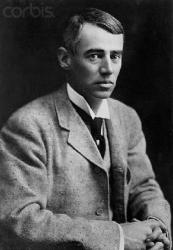
Ronald Dworkin
 USA
USABiography of Ronald Dworkin
Ronald Dworkin was an American lawyer, political scientist, philosopher, and legal theorist. He was born on December 11, 1931, in Worcester, Massachusetts. Dworkin studied at Harvard University and later at the University of Oxford. After completing his studies, he returned to America and worked as a clerk for a judge in the Second Circuit Court of Appeals. He then practiced law in New York before becoming a professor at Yale University. In 1969, he assumed a faculty position in jurisprudence at Oxford and, from the late 1970s, taught concurrently at New York University and the New York University School of Law. After retiring from Oxford, Dworkin held the position of professor of jurisprudence at University College London. He was also a Queen's Counsel and a member of the British Academy.

Contributions and Views
Dworkin was a critic of H.L.A. Hart's legal positivism and developed the concept of "law as integrity/fairness." He believed that law is an "interpretive" process that is derived from the institutional history of the legal system. When making decisions, judges interpret the institutional experience, "justifying" and "reasoning" it. This "constructive interpretation" of the law is based on the political legitimacy of a particular tradition, which is embodied in accessible materials from the past. Dworkin argued that this justification is the moral principle of the legal system, which he referred to as "law as fairness" or "integrity."
According to Dworkin, there exists a morally superior (or "most principled") solution to all legal issues, and only one such solution. He constructed the hypothetical figure of a "legal Hercules," a judge with unlimited knowledge of legal principles and unlimited time to make decisions. He asserted that such a judge would be infallible. Dworkin believed that law and morality are connected, unlike the moral indifference of positivism, but he argued that they are linked epistemically rather than "naturalistically," as in the concepts of eighteenth-century "natural law."
Critics of Dworkin argue that moral principles of law are just as ambiguous and complex as the law itself, and his "Hercules" figure may face the same dilemmas. Others claim that his theory is merely rhetorical embellishment and, in practice, it amounts to an apologist for the decisions of the Supreme Court of the United States, granting judges too much freedom in decision-making.