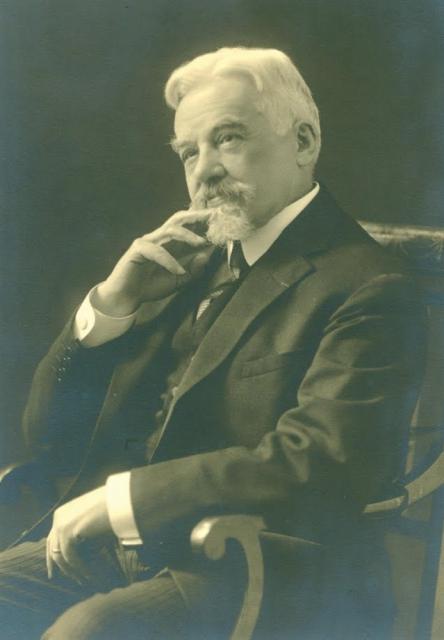
Raymond Carre de Malberg
 France
- Raymond Carré de Malberg: A Pioneer of French Legal Positivism
- Academic Career and Dissertation
- Interest in Alsace-Lorraine
- Move to Strasbourg
- Legal Philosophy and Theories
- Critique of Parliamentarism
- Influence of German Law
- Major Work: "Contribution à la théorie générale de l'Etat"
- Legacy and Influence
Raymond Carré de Malberg: A Pioneer of French Legal Positivism
Raymond Carré de Malberg, a prominent French lawyer, is widely recognized as a classicist of legal positivism in France.
Academic Career and Dissertation
Born in 1861, Carré de Malberg earned his doctorate in 1887 with his dissertation titled "History of Exceptions in Roman Law." He subsequently taught civil law in Caen.
Interest in Alsace-Lorraine
During World War I, his interest turned towards the legal system of Germany, particularly after the revival of hopes for the return of Alsace-Lorraine to France. His work "The Legal Status of Alsace-Lorraine in the German Empire" (1914) explored this topic in depth.
Move to Strasbourg
After the war, Carré de Malberg successfully transferred to Nancy, closer to his birthplace, and then returned to Strasbourg, where he remained for the rest of his career. In this period, he produced his most influential works in constitutional law and comparative law, often focusing on Germany.
Legal Philosophy and Theories
As a "pure legal positivist," Carré de Malberg advocated for the separation of law and morality, favoring state authority (etatism). However, he also acknowledged the role of morality within his theory and was skeptical of customary and precedent-based law.
Critique of Parliamentarism
Carré de Malberg criticized the parliamentarism of the Third Republic and proposed the popular election of the Republic's president. Following Montesquieu, he developed the concept of justice as a third power, along with his contemporary Léon Duguit.
Influence of German Law
German legal theories had a significant influence on Carré de Malberg, and his name is often mentioned alongside legal positivist Hans Kelsen. He supported the theory of the Rechtsstaat, emphasizing the rule of law, in contrast to the French concept of the nation-state.
Major Work: "Contribution à la théorie générale de l'Etat"
Carré de Malberg's seminal work, "Contribution à la théorie générale de l'Etat," published in 1920-1922, provided a comprehensive analysis of the state. It has had a deep impact on French constitutionalism in the 20th century and continues to be studied internationally.
Legacy and Influence
Raymond Carré de Malberg remains a prominent figure in the history of French law. His ideas and theories have profoundly shaped contemporary legal philosophies, both in France and abroad.


