Antoni Tapies
 Spain
Antoni Tàpies was a Catalan painter, sculptor and writer whose rough, tactile works helped make postwar Spanish art known around the world. He transformed ordinary materials—dust, sand, paper, fabric and discarded objects—into images that invited viewers to consider memory, mortality and the traces people leave behind.
Early life and first experiments
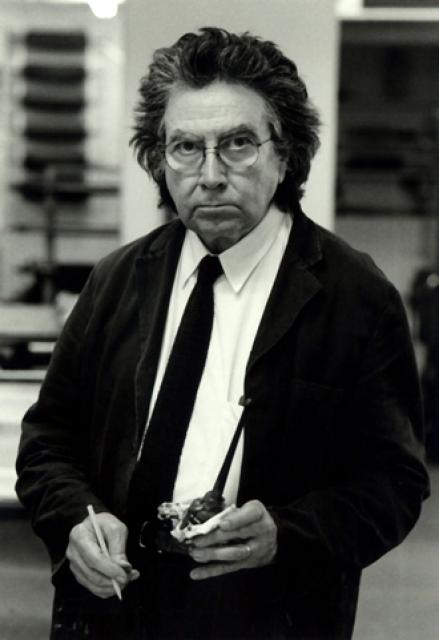
Tàpies was born in Barcelona on 13 December 1923. A serious illness during his adolescence led to a long period of convalescence, when he began to draw and paint. He studied law for several years but gradually turned toward art, largely teaching himself through close study of modern painting, philosophy and literature.
In 1948, he helped found *Dau al Set*, an avant-garde group and magazine that challenged the cultural isolation of postwar Spain. Its early work drew on surrealism and the fantastic. A scholarship took Tàpies to Paris in 1950, where he encountered new currents in abstract art and political thought.
Material painting
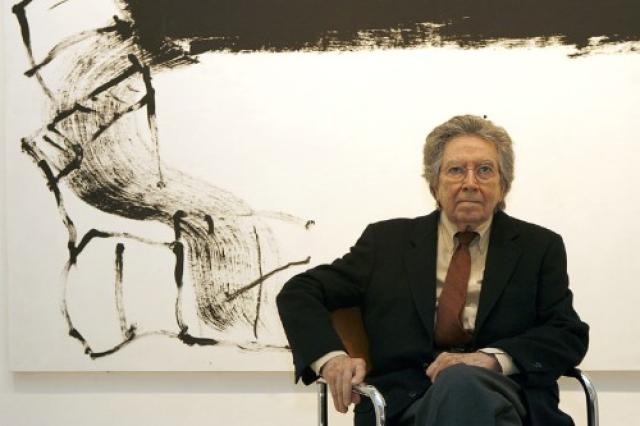
During the 1950s, Tàpies developed the approach that became his signature. Rather than treating a canvas as a window onto a scene, he made it resemble a wall or worn surface: thick, layered, scraped, marked and sometimes embedded with everyday materials. He mixed paint with substances such as sand and marble dust and incorporated rope, cloth and paper into his work.
His paintings often combine abstraction with simple signs—crosses, letters, numbers, lines and bodily forms. These marks feel personal but remain open to interpretation. They can suggest the passage of time, pain, spiritual searching or the presence of ordinary life. Tàpies’ works occupied a space between painting, collage and sculpture, expanding ideas about what art could be made from.
Recognition and public work
Tàpies exhibited internationally from the early 1950s and became a major figure in European informalism. His work entered the collections and exhibition programs of leading museums. Among his many honors were Spain’s Gold Medal for Merit in the Fine Arts, the Prince of Asturias Award for the Arts in 1990 and the Velázquez Prize in 2003.
He also wrote extensively about art and culture and remained committed to Catalan identity. In 1984, he established the Fundació Antoni Tàpies to promote the study of modern and contemporary art and to preserve and exhibit his work. The foundation opened to the public in Barcelona in 1990.
Legacy
Tàpies continued working into his later years, revisiting familiar signs and materials in new forms. He died in Barcelona on 6 February 2012. His art remains distinctive for its physical presence: surfaces that appear weathered and intimate, yet carry questions about history, belief, the body and the meaning of everyday objects.