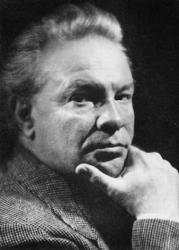
Antonio Bazzini
 Italy
Italy- Antonio Bazzini: A Musical Virtuoso and Pedagogue
- Performance Career
- Composition and Recognition
- Teaching and Legacy
Antonio Bazzini: A Musical Virtuoso and Pedagogue
Early Life and EducationAntonio Bazzini, an Italian musician, was born in Brescia, Italy. As a young man, he studied music under Faustino Camisoni, a local violinist. At 17, he performed before the renowned violinist Niccolo Paganini, earning his approval to begin concertizing.
Performance Career
In the mid-1840s, Bazzini traveled to Leipzig to refine his skills, focusing particularly on the music of Bach and Beethoven. He embarked on a successful concert career, but in the mid-1860s, he gradually shifted his focus towards composition.
Composition and Recognition
Among Bazzini's notable compositions are the opera "Turanda" (1867), inspired by Carlo Gozzi's play. He also crafted the symphonic poem "Francesca da Rimini" (1879), overtures based on Shakespeare's "King Lear" (1871) and Alfieri's "Saul" (1867), and six string quartets (the first of which won the Milan Quartet Society's top prize in 1864). In 1868, he composed "Dies Irae" for a collective Requiem Mass for Gioachino Rossini. However, his most enduring piece remains the virtuosic violin miniature "La Ridda Dei Folletti" (1852).
Teaching and Legacy
From 1873 onwards, Bazzini taught at the Milan Conservatory, serving as its director from 1882. Among his pupils were renowned composers such as Giacomo Puccini, Pietro Mascagni, and Alfredo Catalani. His virtuosic pieces for violin and piano continue to be performed by violinists worldwide, contributing to his lasting legacy as a musical virtuoso and педагог.