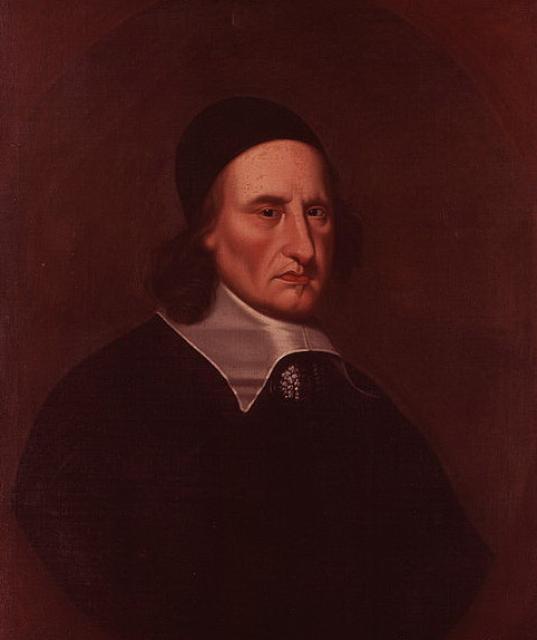
Archibald Campbell
 Great Britain
- Early Life and Rise to Power
- Involvement in the Covenanting Movement
- Conflict with Montrose and Intervention in England
- Defeats and Negotiations
- The Execution of Charles I and the Restoration
- Decline and Execution
Early Life and Rise to Power
Archibald Campbell was born into a powerful Scottish noble family as the eldest son of Archibald Campbell, 7th Earl of Argyll. At a young age, he inherited the earldom of Argyll when his father converted to Catholicism and allied with Spain. Campbell married Margaret Douglas, the eldest daughter of William Douglas, 7th Earl of Morton, and they had six children together.
Involvement in the Covenanting Movement
Amidst religious tensions between King Charles I and Scotland, Campbell became a prominent supporter of the Covenanting movement. He defied the king's attempts to suppress the movement, warning him of the consequences of arbitrary church policies. In response, the king authorized an invasion of Argyll and manipulated the MacDonalds to oppose Campbell.
Argyll swiftly joined the Covenant, realizing the benefits of aligning with the popular movement. He attended General Assembly meetings and even besieged Hamilton Castle, defying the king's attempts to control religious affairs. Campbell's influence extended to the alteration of the Committee of Articles, allowing for its members to be elected rather than appointed by the crown.
Conflict with Montrose and Intervention in England
As tensions escalated, Campbell clashed with Royalist general James Graham, 1st Marquis of Montrose. Montrose attempted to arrest Argyll, but the plot was foiled, and Montrose was imprisoned. The king reluctantly yielded ground, granting Parliament additional powers and Argyll the title of Marquis.
In 1644, Argyll led a Scottish army into England to support the Parliamentarians. However, he was forced to return to Scotland to suppress Royalist uprisings and protect his own lands. Argyll and Montrose continued to maneuver, but a decisive battle eluded them.
Defeats and Negotiations
On February 2, 1645, Argyll confronted Montrose at Inverlochy. Despite the surprise attack, Montrose's forces routed Argyll's army. Subsequent defeats forced the Scots to surrender, prompting Argyll to negotiate with the king in Newcastle.
Argyll had previously protected Scottish liberties and religion, reducing royal authority in Scotland. However, the tides turned against him, and he was compelled to compromise. Despite the support of John Campbell and Alexander Leslie, efforts to form a new government failed.
The Execution of Charles I and the Restoration
The execution of Charles I in 1649 sparked a civil war in Scotland. Argyll's influence waned as he struggled to control events. When Charles II arrived in Scotland, a peace agreement was reached with the Covenanters. Montrose was executed, and Argyll retained his role as head of the administration.
Decline and Execution
Campbell's power continued to decline, and by 1652, he was heavily in debt and alienated from his eldest son. His downfall came with the Restoration of Charles II. Campbell traveled to Whitehall, where he was arrested for treason and complicity in the murder of Charles I. He was sentenced to death and executed on May 27, 1661.