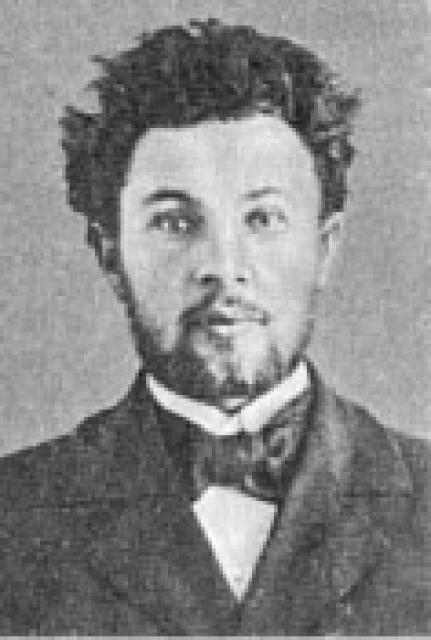
Aron Vaynshteyn
 Russia
- Early Life and Revolutionary Beginnings
- Leading Role in the Bund
- Revolutionary Transition
- From Defensivism to Bolshevism
- Subsequent Career
- Arrest and Rehabilitation
Early Life and Revolutionary Beginnings
Born to a clerk in the Russian Empire, Grigory Vayshteyn joined the revolutionary movement in 1893. As a member of the Jewish General Workers Union (Bund) since 1897, he played an active role in socialist organizing in Vilnius and Warsaw. Vayshteyn attended the Jewish Teacher's Institute in Vilnius and was a delegate to the 5th Congress of the Russian Social Democratic Labour Party (RSDLP) in 1907.
Leading Role in the Bund
Vayshteyn's rise through the ranks of the Bund was marked by his election to its Central Committee in 1901. He remained a member until 1921. Despite facing repeated repression, Vayshteyn's influence within the Bund grew. He was elected chairman in 1917 and played a pivotal role in leading the majority of Bund members into the Russian Communist Party (RKP(b)) in 1920.
Revolutionary Transition
During the 1917 February Revolution, Vayshteyn became a member of the executive committee and chairman of the Minsk City Duma. As chairman of the Bund, he opposed the Bolsheviks' call for socialist revolution at the First All-Russian Congress of Soviets. He argued that the support of underdeveloped nations was essential for the success of revolution, a view that Lenin criticized as "Bakunist."
From Defensivism to Bolshevism
While initially holding a centrist and later a defensive position during World War I, Vayshteyn's political stance shifted after the February Revolution. He supported the participation of the Bund in the State Conference in Moscow and became a member of the Presidium of the Unification Congress of the RSDLP. However, he voted against the creation of the Military Revolutionary Committee in October and denounced the Bolshevik seizure of power.
Subsequent Career
Despite his initial opposition to the Bolsheviks, Vayshteyn recognized the necessity of Soviet power. He joined the RKP(b) in 1920 and held prominent positions in the Belarusian Soviet Socialist Republic and the Kirghiz Soviet Socialist Republic. Vayshteyn also played a significant role in the financial administration of the Soviet Union as a member of the Collegium of the People's Commissariat of Finance.
Arrest and Rehabilitation
Vayshteyn's career came to a tragic end in 1938 when he was arrested and died in prison from a heart attack. He was rehabilitated in 1956, recognizing his contributions to the revolutionary movement and his eventual support for the Soviet state.




