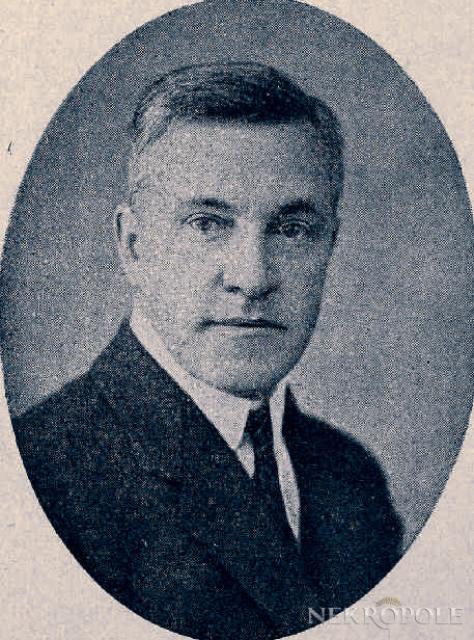
Arved Berg
- A Prominent Latvian Figure: Arveds Bergs
- Legal and Business Career
- Political Activism
- Establishment of the Latvian Democratic Party
- Support for Liberalism and National Autonomy
- Leadership in the Latvian National Movement
- Creating a New Political Party
- Deportation and Legacy
A Prominent Latvian Figure: Arveds Bergs
Early Life and EducationArveds Bergs was born into a prominent Latvian family in 1870. His father was a prominent public figure and entrepreneur, Carlis Bergs. Bergs pursued a degree in law at the University of Tartu, graduating with honors in 1896.
Legal and Business Career
Upon graduation, Bergs moved to St. Petersburg to work in the legal field. He first served as a clerk in the St. Petersburg District Court before becoming a practicing lawyer in the Court of Justice. In 1901, Bergs returned to Riga as a sworn attorney. Simultaneously, he ventured into entrepreneurship, investing in construction and establishing several credit institutions.
Political Activism
Bergs became involved in the Riga Latvian Society, where he emerged as a leader of its "extreme" right-wing faction. He advocated for the interests of factory owners and property owners, opposing the aspirations of less affluent Latvians. However, he also supported the need for agrarian reforms and a more democratic system of local self-governance.
Establishment of the Latvian Democratic Party
With the outbreak of the Revolution of 1905-1907, Bergs became more active in politics. He founded the Latvian Democratic Party, which was met with resistance from the reactionary central government. Bergs was exiled from Latvia in 1907 but returned after the end of martial law.
Support for Liberalism and National Autonomy
Upon his return, Bergs became a staunch supporter of liberal and democratic ideals. He established the Riga Liberal Club in 1911. During World War I, he dedicated his efforts to aiding Latvian refugees. He also published a newspaper, "Baltija," which advocated for the creation of a Latvian national state.
Leadership in the Latvian National Movement
In 1917, Bergs became the leader of the Latvian Temporary National Council. He played a crucial role in drafting the declaration of Latvia's independence. After the failed coup attempt by Bermont-Avalov, Bergs was appointed Minister of Internal Affairs in 1919, a position he held until 1921.
Creating a New Political Party
After leaving his ministerial post, Bergs established a new political party, the National Union. Its platform opposed the policies of the ruling parties and attracted wealthy urban residents. However, the party lost representation in the parliament with subsequent elections and ceased to exist after the coup of 1934.
Deportation and Legacy
With the re-establishment of Soviet rule in Latvia in 1940, Bergs was deported by the NKVD to the Soviet interior. The exact date and location of his death remain unknown.
Arveds Bergs's political journey saw him evolve from a conservative supporter of the authorities to a fervent advocate for liberalism and self-governance for Latvians. His ideas, along with those of other Latvian ideologues, contributed to the eventual independence of Latvia. However, his legacy is also marred by the political instability that plagued Latvia during certain periods of its early history.