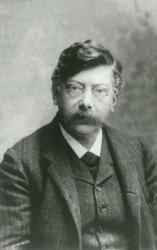
Augusto Sandino
 Nicaragua
Augusto César Sandino became the most prominent Nicaraguan opponent of U.S. military intervention in the early twentieth century. A rural worker who turned to arms during a civil conflict, he led a guerrilla campaign in the northern mountains and rejected a settlement that would leave U.S. Marines in Nicaragua. His resistance made him an international symbol of national self-determination, but a peace agreement ended his rebellion only months before he was assassinated by the country’s National Guard.
Early life and work
Born Augusto Nicolás Calderón Sandino in Niquinohomo, Nicaragua, on 18 May 1895, he was the son of Gregorio Sandino and Margarita Calderón. His father was a small businessman; his mother worked in coffee fields. As a boy, Sandino also labored in the fields before returning to live with his father. His formal education ended early, and he worked in the family’s grain business.
In 1916, he left Nicaragua for Costa Rica, later working in Honduras and Mexico. In Mexico he found employment as a mechanic in the oil industry, where he encountered a wide range of political ideas circulating among workers during the aftermath of the Mexican Revolution. Those experiences helped shape the mix of nationalism, social justice and anti-imperialism that would later define his public writings.
The decision to keep fighting
Sandino returned to Nicaragua in 1926, as Liberal forces challenged a Conservative government. U.S. forces had intervened in the country repeatedly, and Marines were again deployed during the civil conflict. In 1927, U.S. envoy Henry Stimson brokered the Espino Negro agreement between Liberal general José María Moncada and Conservative president Adolfo Díaz. The Liberal forces accepted the settlement and disarmed; the agreement also provided for a U.S.-supervised election and left the Marines in place.
Sandino refused to surrender. He argued that the settlement traded away Nicaragua’s sovereignty and insisted that foreign troops must leave. In September 1927, he organized the Ejército Defensor de la Soberanía Nacional de Nicaragua, or Army in Defense of the National Sovereignty of Nicaragua. It began as a small force in the Segovia mountains, drawing support from peasants, workers and local allies. Its fighters used mobile guerrilla tactics against both U.S. Marines and the Nicaraguan National Guard.
Campaign and political vision
Sandino’s forces faced superior weapons and repeated military pressure, including aerial reconnaissance and attacks on their mountain encampments. They nevertheless remained active for years, sustaining a conflict that drew attention across Latin America and beyond. His manifesto of July 1927 called for Nicaraguans and other peoples of Latin America to unite against foreign domination. The language combined nationalism with a broader vision of regional solidarity.
His political outlook was not a simple fit for a single ideology. In Mexico he had encountered anarchist, socialist and communist thought, while his own statements emphasized sovereignty, social justice and the rights of workers and peasants. Historians have debated the shape and consistency of his ideas. He was also a strategist whose practical goal was to end the occupation and secure self-rule, not simply to wage an endless war.
In 1929, Sandino travelled to Mexico seeking support from President Emilio Portes Gil, but the mission failed to bring the aid he wanted. He returned to the conflict as his forces continued their campaign. U.S. Marines withdrew from Nicaragua in January 1933 amid changing U.S. policy and the prolonged resistance. Sandino then negotiated with the newly elected president, Juan Bautista Sacasa. The agreement granted amnesty and allowed him to establish agricultural cooperatives in the Coco River region; his fighters agreed to disarm.
Assassination
The settlement did not remove the mistrust between Sandino and the National Guard, commanded by Anastasio Somoza García. On 21 February 1934, after meetings with President Sacasa in Managua, Sandino, his brother Socrates and two of his generals were seized by National Guard members and killed. His remains have never been found. His wife, Blanca Aráuz, who had been involved in the resistance, died in 1933 after giving birth to their daughter.
Legacy
Sandino’s campaign did not achieve his aim of an autonomous region or a lasting political settlement for his followers. Yet his refusal to accept a U.S.-brokered disarmament became a defining act of resistance in Nicaragua’s modern history. The National Guard that killed him later helped Somoza García rise to power, and the Somoza family ruled Nicaragua for decades.
In the 1960s, the Sandinista National Liberation Front adopted his name and invoked his anti-imperialist legacy in its struggle against the Somoza dynasty. His memory has since carried different meanings: a national symbol of resistance to foreign intervention, an inspiration to revolutionary movements, and a figure whose political ideas remain the subject of debate. Sandino’s life ended in betrayal after a fragile peace, but his name endured as shorthand for Nicaragua’s demand to decide its own future.