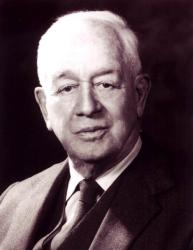
Avgust Wasermann
 Germany
Biography of August Wassermann
August Wassermann was a German immunologist who was born in the small German town of Bamberg in a prosperous banker family. Despite his physical defect of being hunchbacked and short statured, Wassermann's parents named him August, which means "royal" in Greek. According to his biographers, this physical disadvantage served as one of the main motivations for his work and desire to achieve greatness and fame. With abundant resources and a desire to hide his defect, Wassermann took great care of himself and dressed elegantly. He delivered brilliant lectures on microbiology and infectious diseases, openly expressing his opinions, which did not prevent him from later publicly renouncing them.
After graduating from the medical faculty of the University of Strasbourg, Wassermann worked at the Robert Koch Institute of Infectious Diseases from 1890 to 1906, where he conducted research that brought him worldwide fame. Wassermann was known to be a brilliant organizer rather than a theoretician. He surrounded himself with talented employees who worked tirelessly, investigating and testing the hypotheses of other scientists. He was one of the first to evaluate the works of Bordet and Jung, who described the phenomenon of complement binding with antigen-antibody complexes. Wassermann and his team spent a lot of time and effort trying to use this reaction for the diagnosis of tuberculosis but were unsuccessful.
In 1906, Wassermann, together with Neisser and Bruck (who were full co-authors of his discovery), began using the Wassermann reaction (WR) for the diagnosis of syphilis and obtained astounding results: laboratory data precisely correlated with the clinical manifestations of the disease. After this, during one of his public lectures, Wassermann admitted that WR could not be used for the diagnosis of tuberculosis and apologized to his colleagues for taking their time to test his hypothesis. The disappointed audience started to disperse, but Wassermann stopped them, announcing loudly that WR could successfully be used for the diagnosis of syphilis, not only in its early stages but also in its late forms. Despite the lukewarm reception of Wassermann's announcement, his colleagues started to verify his data and soon confirmed that WR was a valuable diagnostic method for syphilis. It is remarkable that the causative agent of syphilis, Treponema pallidum, was discovered by Schaudinn just a year before these events. The complement fixation in relation to syphilis indicated that specific (syphilitic) antibodies were present in the tested serum. But how to establish the fact of complement fixation? The so-called hemolytic system was used to indicate this phenomenon, consisting of sheep red blood cells and hemolytic serum (serum from a rabbit immunized with sheep red blood cells). If after combining all the ingredients (patient's serum, antigen, and hemolytic system) there is no hemolysis (the reaction medium is transparent), it means that complement is adsorbed on the antigen-antibody complex, i.e., the reaction for syphilis is positive. If hemolysis occurs (pink coloration of the reaction medium), it indicates the presence of free complement that causes hemolysis, therefore, the interaction between the tested serum and the antigen does not occur, and the reaction is negative.
As an antigen, Wassermann proposed an aqueous suspension of the liver of a fetus who died from syphilis (Wassermann antigen). The choice of antigen turned out to be very successful (and this is also the merit of the author), as it allowed confirming the fundamental possibility of using this type of reaction for the diagnosis of syphilitic infection. In the future, a cardiolipin antigen, which is a purified extract from the muscles of a bull's heart, started to be used for these purposes. The possibility of using a nonspecific antigen is explained by the presence of at least 4 antigens in the antigenic composition of Treponema pallidum, including the lipid antigen, which is widely distributed in nature and is common with the antigen from the bull's heart. In response to the lipid antigen of Treponema pallidum, the formation of specific (protein-lipid) formations, called reagins, occurs in the patient's body. It is on the interaction between the reagins in the patient's blood serum and the lipid antigen that the Wassermann reaction is based (in our country, the abbreviation RW was usually used to denote it). In the future, these two reactions (with cardiolipin and treponemal antigens) were combined with the RPR to create the so-called complex serological (standard) reactions, which were the main tool for serological diagnosis of syphilis for many years.
RW becomes positive in the primary stage of syphilis at the 6th week of the disease in 25-50% of patients and at the 7th-8th week in 75-90% of patients. In secondary syphilis, the vast majority of patients (98-100%) show a positive RW. Furthermore, the positivity of serological reactions decreases depending on the duration of the disease: 90-95% for early latent syphilis, 80% for late latent syphilis, and 60-70% for tertiary syphilis. However, a positive RW does not always indicate the presence of syphilis. Positive reactions can occur in healthy individuals (for example, after consuming a rich fatty meal), in various other diseases (such as lupus erythematosus, leprosy, hepatitis, tuberculosis, oncological diseases, rheumatism, blood diseases, etc.), and certain physiological conditions (pregnancy, menstruation). In these cases, specific reactions such as TPHA, RIF, and IFA are necessary to confirm the diagnosis of syphilis. RW has significant value in the practical work of physicians and medicine as a whole. Its introduction into medical practice has helped solve a significant range of diagnostic and therapeutic questions and has essentially contributed to the development of modern syphilology. The following is a brief list of the effective use of RW:
- During the primary stage of syphilis, serological diagnosis allows not only to confirm the diagnosis but also to determine the time of infection.
- Serological investigations are the only means for diagnosing hidden forms of the disease.
- For cases of visceral involvement and neurosyphilis, the final diagnosis is based on serological investigations.
- The assessment of the effectiveness of treatment (microbiological cure) is based on serological data.
- Serological investigations play a crucial role in preventive measures in infection foci (administration of preventive treatment).
- The results of serological investigations are important when removing syphilis patients from follow-up.
- Serological evidence is valuable for forensic medical expertise.
The RW is also used for the diagnosis of other infectious diseases. However, it is the Wassermann reaction that, due to its significant social and medical demand, has become the basis of serology for infectious diseases.
It should be noted that the Wassermann reaction has certain drawbacks. Firstly, there are technical difficulties. The amount of added complement must be predetermined (complement titration). If there are excesses of complement remaining in the reaction medium after complement adsorption with the antigen-antibody complex, they can cause hemolysis of red blood cells and result in a false-negative reaction. On the other hand, if the amount of complement is too low, it may not cause hemolysis of red blood cells in the absence of a reaction between the antibodies in the test serum and the antigen, resulting in a false-positive reaction. All these factors make it impossible to standardize the diagnostic process and hinder the reproducibility of results. For this reason, the results of investigations on the same serum in different laboratories often yield different results.
The assessment of the intensity of the reaction in + (crosses) is subjective, depending not only on the qualification but also on the psychophysiological state of laboratory workers. The Wassermann reaction is not sufficiently sensitive and specific.
The production of RW could not be automated, which made it impossible to conduct mass screening investigations. As a result, in the early 1970s, the United States, United Kingdom, France, and other countries began to abandon the use of RW for screening and diagnosing syphilis, introducing tests such as VDRL or RPR instead. In Russia, the analogs of these reactions are RPR and RMP. Simultaneously, RPR and IFA were used as screening and confirmatory reactions, and RIF was used for confirmation of the diagnosis. Since then, about 30 years have passed, and accumulated experience has shown not only the convenience and effectiveness of this diagnostic complex but also a number of obvious advantages, which are mentioned in the aforementioned order of the Ministry of Health of the Russian Federation No. 87 and can be summarized as follows:
- RMP, as well as RPR and VDRL, have high sensitivity and specificity, especially in secondary (100%) and hidden (98%) syphilis, and they are well combined with confirmatory tests. These reactions do not require special equipment or complex preparation. Importantly, these reactions can be performed with quantitative assessment by determining the titer of reagins. This allows for important practical questions to be addressed, such as evaluating the speed of titer reduction to assess treatment efficacy and formulating criteria for seroresistance.
- RPR can be used for screening and diagnosing syphilis. The method is extremely simple, does not require special equipment or highly qualified specialists. The specificity of the reaction reaches 99% for late forms of syphilis. When compared to the "gold standard" reactions of the past, RIF and RIBT, it has been found that RPR has higher sensitivity. Specialists anticipate that RPR will take a leading role in syphilis serodiagnosis in the future.
- IFA can also be used for screening and diagnosing the disease. It has high sensitivity, specificity, and reproducibility. The method is easily automated, which is convenient for examining large populations. IFA is successfully used for cerebrospinal fluid diagnosis of syphilis with sensitivity and specificity of up to 100%. IFA allows for the determination of total treponemal immunoglobulins as well as separate classes of G and M, which will be crucial for diagnosing early congenital syphilis, differential diagnosis of reinfection and relapse, and studying the causes of seroresistance.
- RIF and the treponemal immobilization reaction (RIBT) have long been used as specific diagnostic reactions with high sensitivity and specificity comparable to IFA and RPR. However, the economic aspect of these reactions is quite high and cannot be compared (especially RIBT) to the mentioned analogs.
Two years after the start of the new stage of improving the serological diagnosis of syphilis in Russia, it has been seen that the changes are generally met with understanding and approval by specialists, although it is evident that the "Wassermann crosses" still live in the consciousness of not only general practitioners but also dermatologists and venereologists. Time and new practices will gradually solidify the advantages of the proposed diagnostic complex in our consciousness and make them customary. In accordance with Order No. 87, RW will no longer be used for syphilis diagnosis in 2006. This means that by the end of this year, all primary syphilis patients should be tested using the RPR-RPGA and IFA complex, so that clinical-serological control can be conducted based on the new complex. During this period, RW will only be used for patients for whom it has been previously used for diagnosis and clinical-serological control.
The scientific community has recognized the merits of August Wassermann, although he never became a professor at the University of Berlin or a Nobel laureate. In three years, we will celebrate the 100th anniversary of the Wassermann reaction. The great scientist "has done his job," and the memory of this scientific discovery will remain not only among scientists and specialists but also among the tens of millions of fully cured patients and their healthy offspring, who will serve as a living monument to the remarkable scientist August Wassermann for many years to come.