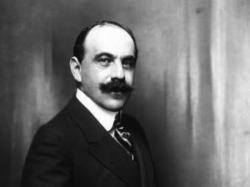
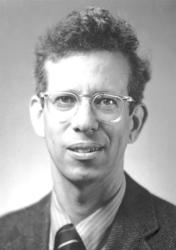
John Frenklin Enders
 USA
USA- Biography of John Franklin Enders
- Research on Viruses and Vaccine Development
- Personal Life and Legacy
Biography of John Franklin Enders
John Franklin Enders was an American bacteriologist and virologist, born in West Hartford, Connecticut, in the family of banker John Ostrom Enders and Harriet Enders (Whitmore). He attended the prestigious St. Paul's School in New Hampshire and enrolled in Yale University in 1915. After serving in the military air forces during World War I, he returned to Yale University and obtained a bachelor's degree in 1920.
However, Enders soon realized that he was not meant for a business career and decided to pursue his passion for microbiology. He attended Harvard University, where he obtained a master's degree in English literature in 1922. During his time at Harvard, he lived in a dormitory room with a student from the Harvard Medical School, who introduced him to Hans Zinsser, a microbiologist and head of the Department of Bacteriology and Immunology at Harvard University.
Zinsser convinced Enders to pursue microbiology, and in 1927, he began working in Zinsser's laboratory. In 1930, Enders obtained his doctorate from Harvard University and became a professor at the same institution, continuing his work with Zinsser.
Research on Viruses and Vaccine Development
While studying viruses, Enders initially researched various pathogens. In 1940, despite not being able to grow any virus in tissue culture in quantities sufficient for vaccine production, Enders and his colleagues obtained a vaccine against feline panleukopenia from infected animals. This work provided them with valuable experience in tissue cultivation.
When the United States entered World War II in 1941, Enders paused his tissue culture research and focused on studying the mumps virus using live animals. From 1942 to 1946, he served as a civilian consultant to the Secretary of War on infectious diseases. After the war, he accepted an offer to establish a new research laboratory on infectious diseases at Boston Children's Hospital.
In early 1947, Enders and his colleagues resumed their research on virus propagation in tissue culture, attempting to grow the mumps virus in chick embryo cells, which they had studied during the war.
In 1954, Enders, along with Thomas Weller and Frederick Robbins, was awarded the Nobel Prize in Physiology or Medicine for their "discovery of the ability of poliomyelitis viruses to grow in cultures of various types of tissue." In 1967, Enders retired from Harvard University and was appointed Honorary Professor of Bacteriology and Immunology at Harvard Medical School. He continued to be involved in medical research and in his later years, studied acquired immunodeficiency syndrome (AIDS).
Personal Life and Legacy
In 1927, Enders married Sarah Francis Bennett, and they had a daughter and a son. Sarah passed away in 1943, and in 1951, he married Carolyn Kin. In his free time, Enders enjoyed playing the piano, gardening, and fishing. On September 8, 1985, he passed away suddenly at his country home in Waterford, Connecticut.
In addition to the Nobel Prize, Enders received numerous other prestigious awards, including the Passano Award from the Passano Foundation (1953), the Lasker Award from the American Public Health Association (1954), the Scientific Achievement Award from the American Medical Association (1963), the Presidential Medal of Freedom (1963), and various honorary degrees from several universities. He was a member of the American Academy of Arts and Sciences, the National Academy of Sciences, the American Association for the Advancement of Science, and the American Association of Immunologists.