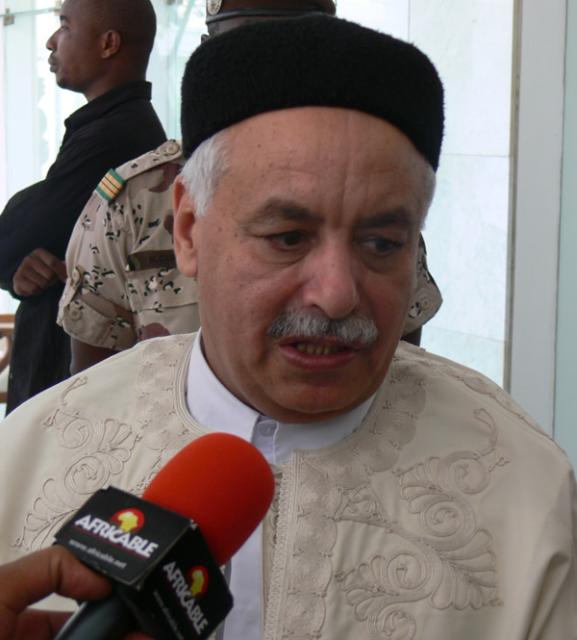
Baghdadi Mahmoudi
 Libya
Libya- Biography of Ali Al-Baghdadi Al-Mahmoudi
- Early Life and Career
- Achievements and Controversies
- Infrastructure Development
- Legacy and Controversies
Biography of Ali Al-Baghdadi Al-Mahmoudi
Ali Al-Baghdadi Al-Mahmoudi, the General Secretary of the Libyan Higher National Committee, became the 11th General Secretary of the Higher National Committee of Libya on March 5, 2006. This position is often equated with the role of Prime Minister, so Ali Al-Baghdadi Al-Mahmoudi is commonly referred to as the Prime Minister of Libya.
Early Life and Career
Ali Al-Baghdadi Al-Mahmoudi was born in 1945. Little is known about the personal life of the Libyan Prime Minister. He received a medical education, specializing in obstetrics and gynecology, and served as the Minister of Health of Libya for a long time. In 2006, he became the Prime Minister of Libya, succeeding Shukri Ghanem in this position.
Achievements and Controversies
During his tenure, Ali Al-Baghdadi Al-Mahmoudi faced several significant events, one of which was the decision on the possible direct distribution of Libya's oil revenue among its citizens. Libyan leader Muammar Gaddafi proposed implementing direct distribution of the country's income to the population. The Prime Minister, Ali Al-Baghdadi Al-Mahmoudi, and the head of the Central Bank of Libya, Farhat Omar bin Guidara, were among the main opponents of this idea. They believed that direct distribution of money among the population would devalue the Libyan dinar and set the country back several centuries. This was due to the fact that in this country, where a large part of the territory is desert, not all cities and villages have access to clean drinking water.
From 1986 to 2003, the United States imposed an embargo on Libya, preventing one of Africa's largest oil-producing countries from exporting its main resource to other countries. However, with the increase in oil prices, Libya began to earn significant revenues from oil and gas exports. Despite this, the country's population has not experienced significant improvements in their quality of life. This was the main reason why Muammar Gaddafi decided to implement a plan for the direct distribution of oil revenue among all the country's inhabitants.
Infrastructure Development
Prime Minister Ali Al-Baghdadi Al-Mahmoudi initiated two major infrastructure projects within the country. One project is the development of a canal network called the "Great Man-Made River," and the other is the railway network. Both of these projects require significant investments, with approximately $20 billion already allocated to them. Notably, a significant portion of the work on both projects will be carried out by Russian contractors. The Russian Railways company (RAO RZD) was awarded a $2.2 billion contract and will construct about 500 kilometers of the planned 3,000-kilometer railway network. The Russian defense industry will also assist Libya in the construction of nuclear power plants, which will desalinate seawater and distribute it to the desert areas of Libya through the canal system.
Furthermore, Libya regularly purchases Russian weapons, with around 90% of the country's defense capabilities consisting of Russian-made weaponry. Ali Al-Baghdadi Al-Mahmoudi plays a significant role in all these projects. As a doctor, he is deeply interested in improving the living conditions and infrastructure of the country's provinces.
Legacy and Controversies
Different voices have varying opinions on the role of Ali Al-Baghdadi Al-Mahmoudi. Some see him as a great politician leading Libya towards civilization and prosperity, while others consider him a corrupt official who divides the country's earned oil dollars among a handful of colleagues. Only history will judge and reveal the true nature of his legacy.


