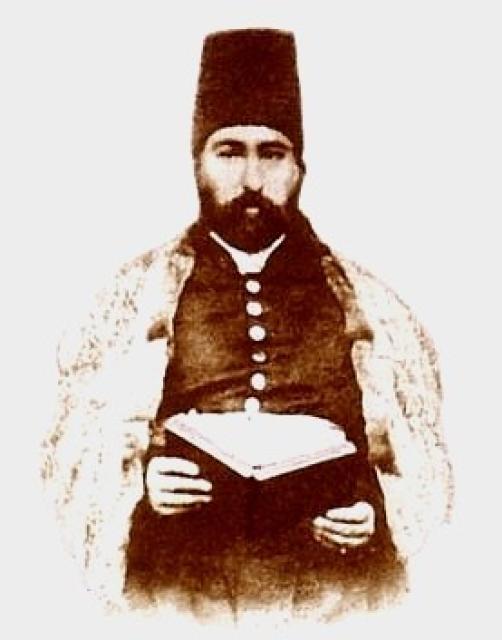
Bahman Mirza Qajar
- Bahman Mirza Qajar: A Persian Statesman and Field Marshal
- Governor and Field Marshal
- Exile in Tiflis and Shusha
- Personal Life and Death
Bahman Mirza Qajar: A Persian Statesman and Field Marshal
Early Life and Rise to PowerBahman Mirza Qajar was born on October 11, 1811, in Tehran, Persia. As a descendant of the Turkic Qajar dynasty, he was the son of Prince Abbas Mirza Qajar, the heir apparent to the Persian throne. His mother, Princess Asiya-khanum, hailed from the prestigious Davalu branch of the Qajar family.
In 1831, Bahman Mirza was appointed Governor of Ardabil by his grandfather, Fath-Ali Shah. Upon Fath-Ali Shah's death in August 1834, Bahman Mirza and his siblings were arrested and imprisoned in the Ardabil Citadel, accused of conspiring against the newly crowned Mohammad Shah. Through the intervention of Mohammad Shah's mother, Bahman Mirza was released from prison in the same year and appointed Governor of Tehran on December 21, 1834.
Governor and Field Marshal
Bahman Mirza subsequently served as Governor of Borujird, Silakhor, and Hamadan until 1841. In 1834, he was bestowed with the rank of Field Marshal of Iran. Following the death of Qahraman Mirza Qajar, he assumed the governorship of Azerbaijan.
As Governor-General of Southern Azerbaijan, Bahman Mirza advocated for reforms, Europeanization, and democratization. However, his enemies slandered him, leading him to flee Tehran to avoid arrest. In May 1848, he boarded the steamship "Lenkoran" and sailed to Baku, then to Shemakha, and finally to Tiflis.
Exile in Tiflis and Shusha
In the Caucasus Viceroyalty of the Russian Empire, Bahman Mirza summoned his family from Tehran and acquired a valuable collection of manuscripts. The Tsarist government received him with great honors, granting him a lifelong pension and offering him a residence in any part of Russia.
After some deliberation, Bahman Mirza requested permission to settle in Shusha, where he moved in 1851 with his large harem, children, and entourage. He constructed an elaborate palace complex enclosed by a high stone wall, which included a two-story mansion with numerous rooms and balconies, an oval hall, a garden, and various service buildings.
Personal Life and Death
In Shusha, Bahman Mirza expanded his harem to sixteen wives, resulting in over sixty children by the end of his life. His sister sent him three Kurdish concubines from Tabriz.
The palace of Bahman Mirza was burned down by Armenians in 1905. Bahman Mirza passed away in Shusha, leaving behind a significant legacy as a Persian statesman and Field Marshal who sought to modernize his country.


