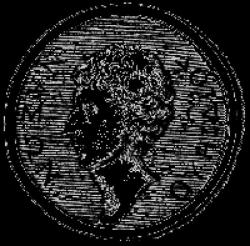
Baltasar Gracian
 Spain
Spain- Biography of Baltasar Gracián y Morales
- Early Literary Career
- Controversies and Challenges
- Legacy and Works
- Baltasar Gracián's Rules on How to Govern One's Destiny
Biography of Baltasar Gracián y Morales
Baltasar Gracián y Morales was a Spanish novelist, philosopher, and literary theorist, as well as a Jesuit. He is widely regarded as one of the most important figures in Baroque literature. Gracián was born in the village of Belmonte near Calatayud, Spain, into a family of doctors. He had three brothers and a sister. From an early age, he was destined for a career in the church, which was common in Spain at the time. In 1619, he became a novice of the Jesuit order in Tarragona. In 1623, he studied theology in Zaragoza. At the age of 30, he taught a course on "moral theology" in Lleida, Catalonia, and at 32, he began teaching philosophy at the Jesuit college in Gandía, Valencia.
Early Literary Career
Gracián's literary career began in 1636 when he moved to Wesk, one of the cultural centers of Aragon, where he held the position of preacher and confessor in the local Jesuit college. Just a year later, he published his first significant work, a moral treatise titled "The Hero," which was well-received in Spain and Europe. Since there was a prohibition for Jesuits to publish anything without prior approval from their superiors, Gracián published his work under the name of his cousin, Lorenzo Gracián.
Controversies and Challenges
In 1657, after the publication of the third part of his work "Criticon," the rector of the Zaragoza college publicly reprimanded Gracián, stripped him of his teaching position, and banned him from teaching. He was expelled from Zaragoza and sentenced to a strict penance of water and bread. The last year of Gracián's life was filled with humiliation, hardships, and despair. He was described by his contemporaries as having a melancholic disposition, a choleric temperament, constantly irritated, and dissatisfied with everyone—an acerbic critic, according to the mandatory reports among Jesuits.
Legacy and Works
Gracián's works were published in Russia between 1742 and 1792, followed by a 200-year hiatus. Thanks to Arthur Schopenhauer, there were 14 reprints in Germany starting in 1861. Some of his notable works include "The Hero" (1637), "The Politician" (1640), "The Art of Worldly Wisdom" (1642), "The Wise Man" (1646), "The Pocket Oracle, or The Art of Prudence" (1647), and "Criticon" (1651-1657). His only signed work is "Reflections on the Communion" (1655). Gracián's complete works were published in Madrid in 1960, with a study, bibliography, and notes by A. del Hoyo.