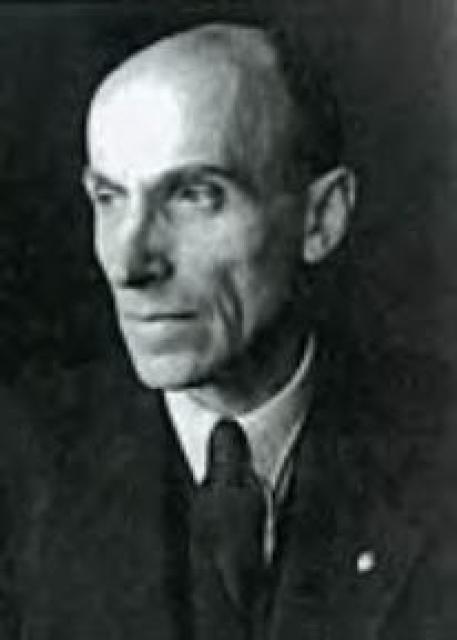
Bela Imredy
 Hungary
- Béla Imrédy: Prime Minister and Politician of Hungary
- Political and Economic Ambitions
- Premiership and Foreign Policy
- Domestic Policies and Right-Wing Support
- Fall from Power
- Post-Premiership and Occupation
- Trial and Execution
Béla Imrédy: Prime Minister and Politician of Hungary
Early Life and CareerBéla Imrédy was born in 1891 into a Catholic family in Hungary. He studied law and later joined the Ministry of Finance, becoming director of the Hungarian National Bank in 1928. In 1932, he was appointed as Minister of Finance in Gyula Gömbös's pro-fascist government. After resigning in 1935, Imrédy returned to the presidency of the Hungarian National Bank.
Political and Economic Ambitions
Imrédy possessed immense ambition and held right-wing views in domestic and social policy. Regarding foreign affairs, he favored a pro-British stance, which led to his appointment as Minister of Economic Coordination in Kálmán Darányi's government.
Premiership and Foreign Policy
Following Darányi's resignation in May 1938, Regent Miklós Horthy appointed Imrédy as Prime Minister. Imrédy's efforts to improve diplomatic relations with the United Kingdom initially strained his relations with Germany and Italy. However, he soon realized the growing German-Italian influence in Hungarian politics and shifted his foreign policy towards pro-German and pro-Italian sentiments by the fall of 1938.
Domestic Policies and Right-Wing Support
Imrédy sought support from the right-wing by founding the Hungarian Life Movement. He successfully suppressed opposition from the radical right, including influential fascists like Ferenc Szálasi, whom he prosecuted. As Imrédy's politics moved further to the right, he proposed a reorganization of the state administration on totalitarian principles and implemented laws that restricted press freedom and imposed economic restrictions against Jews.
Fall from Power
In February 1939, Imrédy's moderate opponents, concerned about his increasing concessions to Germany and the Hungarian right-wing, presented Regent Horthy with documents showing that Imrédy had a Jewish great-grandmother. When confronted by Horthy with this evidence, Imrédy admitted its authenticity and resigned on February 13, 1939.
Post-Premiership and Occupation
Imrédy briefly served in the Hungarian army in 1940 and later founded the pro-fascist and anti-Semitic Hungarian Renewal Party in October of the same year. When German troops occupied Hungary in 1944, German envoy Edmund Veesenmayer recommended him to Regent Horthy as a replacement for Prime Minister Miklós Kállay. However, Horthy instead appointed Döme Sztójay to the position. Imrédy held the post of Minister of Economic Coordination in May 1944 but was forced to resign in August before Géza Lakatos's anti-fascist government came to power.
Trial and Execution
After the Red Army occupied Hungary, Imrédy was arrested and put on trial in November 1945 by the People's Tribunal. He was found guilty of war crimes and collaboration with the Nazis and sentenced to death by firing squad. He was executed in the Markó prison in Budapest in 1946.