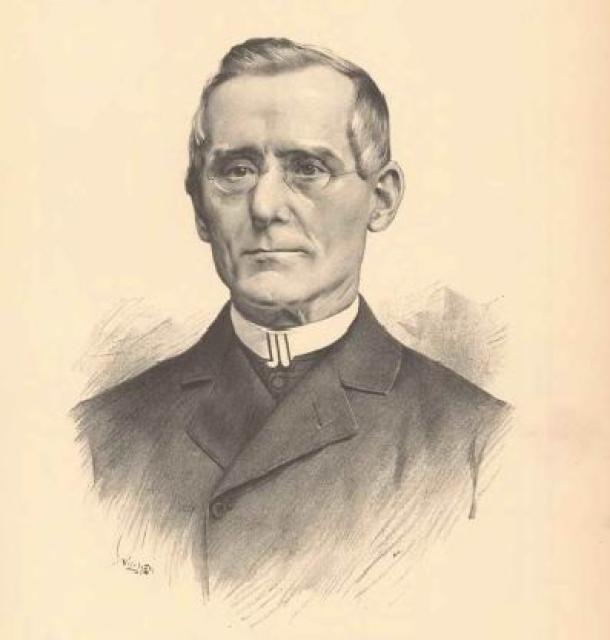
Benes Metod Kulda
Beneš Metod Kulda helped preserve the stories, customs and songs of Moravia at a time when local traditions were increasingly being recorded in print. A Catholic priest by vocation and a writer by temperament, he became one of the nineteenth century’s most prolific collectors and publishers of Czech folk literature. His books brought the tales of the Rožnov region to readers far beyond the villages where they had been told.
Early life and education
Kulda was born on March 16, 1820, in Ivančice, in Moravia. He attended the gymnasium in Jihlava before continuing his philosophical and theological studies in Brno. He was ordained as a Catholic priest in 1845 and began his ministry as a chaplain in Židlochovice.
Alongside his pastoral duties, Kulda developed a substantial literary life. He wrote poetry, prose and religious material, contributed to newspapers and journals, and took part in the Czech national revival, which sought to strengthen Czech language and culture within the Habsburg lands.
Discovering Moravian folklore
A period of recuperation in Rožnov pod Radhoštěm in 1853 proved decisive for Kulda’s later reputation. Encouraged by the composer and collector František Sušil, he began gathering folk tales and legends from the surrounding Wallachian region. Local contributors, including Josef Lucian and Ondřej Kramoliš, helped him collect stories, beliefs and customs that might otherwise have disappeared from the record.
Kulda published the first results in 1854 as Moravian National Fairy Tales and Legends from the Rožnov Region. He continued to collect and edit material, later publishing a study of regional superstitions and customs. His work reached beyond fairy tales to include legends, songs and accounts of everyday folk practices.
A prolific priest, editor and writer
Folklore was only one part of Kulda’s output. He published didactic writing for adults and young readers, religious works, translations and public commentary. He also edited periodicals and calendars, including Moravan, and for nearly three decades edited the religious journal Posvátná kazatelna. His writing connected religious life with a wider effort to cultivate Czech literacy and national identity.
Kulda held several church appointments and eventually became a canon at Vyšehrad in Prague. In his later years, declining eyesight curtailed his public work, though his books and editorial projects continued to circulate.
Legacy
Kulda died in Prague on May 6, 1903. His collections remain important records of Moravian oral culture and have been republished for generations of readers. By gathering stories from local tellers and bringing them into print, he helped preserve a rich regional tradition while contributing to the broader cultural life of the Czech lands.



