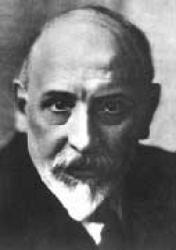
Bernardo (Hoseba) Atchaga (Garmendia)
 Spain
Spain- Biography of Bernard Atxaga
- Early Works
- Career Success
- Literary Contributions
- Later Works
- Legacy and Awards
Biography of Bernard Atxaga
Bernard Atxaga, born Joseba Irazu Garmendia on July 27, 1951, in Asteeasu, Gipuzkoa, Basque Country, is a singer of classical genre. He completed his degree in economics at the University of Bilbao. At the age of 17, he started writing, but it was at 22 when he realized that literature was more than just a hobby and decided to dedicate himself fully to writing books. At that time, he adopted the pseudonym Bernard Atxaga because he believed that a writer must have a pen name.
Early Works
In 1972, Atxaga's first work was published in an anthology of various Basque authors titled "Hiscal Literatura-72," created by poet Gabriel Aresti. In 1976, his book of poems "Ziutateak" was released, followed by "Etiopia" in 1978, for which he received the Critics' Prize in Poetry in 1979. He also published several collections of short stories, including "Antonino izanen da istorioa" in 1982, "Sugeak txoriari begiratzen dionean" in 1984 (which won the Lisardo Prize for Short Stories in 1983), and "Bi letter jaso nieven oso denbora gutxian". Additionally, he has published over 25 books of children's and youth literature, radio novels, and works for the theater.
Career Success
Atxaga's breakthrough came with his novel "Bi anai" in 1985, for which he received the Critics' Prize in Basque prose. In 1988, he wrote "Obabakoak," a collection of interconnected stories set in the fictional country of Obaba. The book won numerous awards, including the National Prize for Literature in 1989 and the Euskadi Literary Prize.
Literary Contributions
All of Atxaga's works have been written and published in Basque. However, some of his poems and stories have been translated into Spanish. In November 1989, "Obabakoak" was released in Spanish. Atxaga has become one of the prominent Basque writers, and his stories are an essential part of the curriculum for Basque-speaking children. Some of his poems have been set to music and performed by Basque musicians. Atxaga has also collaborated with various television programs and wrote the screenplay for the film "Arengasen sabe". He also advocated for the creation of the documentary film "Gernika, arbolaren espiritua" in commemoration of the 50th anniversary of the bombing of Guernica.
Later Works
In 1996, Atxaga continued his literary career with the poetry collection "Nueva Etiopia" and the prose work "Un espia llamado Sara," targeted at children and teenagers. In 1997, he published "Shola y los jabalies," the translated version of "Xola eta basurdeak." In 2002, he was awarded the Eusco Icaskuntza-Caja Laboral Prize for his significant contribution to Basque literature and language.
Legacy and Awards
Atxaga is regarded as one of the most outstanding Basque writers. He has participated in various conversations, conferences, and author meetings. In November 1990, his book "Obabakoak" was one of the six finalists for the European Literature Prize organized by the European Community. In 2002, he collaborated on the compilation of the "Diccionario de la Libertad," explaining the meanings of terms in national languages. In 2003, Atxaga published the novel "Soinujolearen semea," which explores the disappearance of the fictional country of Obaba.
Despite his occasional disillusionment with the profession of a writer, Atxaga believes that culture is common to all and that it should be preserved and continued. He remains an influential figure in Basque literature and continues to engage with his readers through his compelling works.