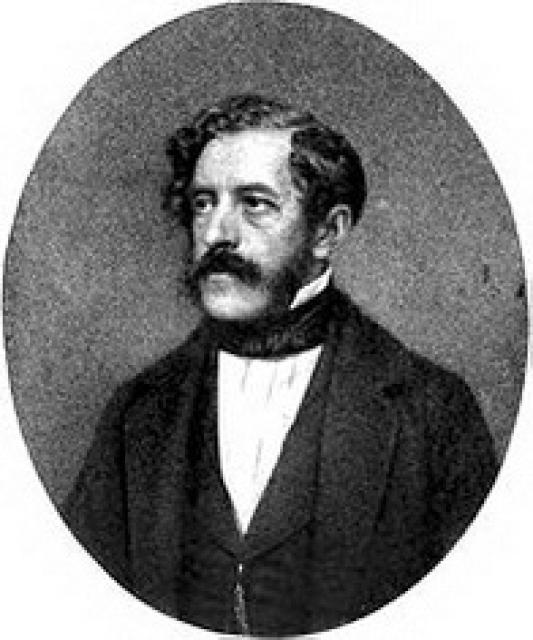
Bernhard Langenbeck
 Germany
- Childhood and Education
- Early Career and Contributions
- Professorship and Innovations
- Collaboration and Recognition
- Landmark Procedures and Legacy
- Conclusion
Childhood and Education
Bernhard von Langenbeckwas born into a family of surgeons. His uncle, Johann Konrad Langenbeck, was a renowned ophthalmologist and surgeon. Langenbeck studied medicine at the University of Göttingen, where he earned his doctorate in 1835 with a dissertation on the structure of the retina.
Early Career and Contributions
Langenbeck traveled to France and England for further training. He published significant works on the surgical treatment of finger cramps and stuttering through subcutaneous incisions. He also introduced the practice of protecting wounds from external air to promote rapid healing.
Professorship and Innovations
Langenbeck held professorships in surgery at Göttingen, Kiel, and Berlin. His students and assistants made numerous contributions from his clinic. Langenbeck himself published groundbreaking research on subcutaneous bone dissection, plastic surgeries (including rhinoplasty), and other surgical techniques.
Collaboration and Recognition
From 1860, Langenbeck co-edited the prestigious "Archiv für klinische Chirurgie" (Archive of Clinical Surgery) with Theodor Billroth and Ernst Gustav Gurlt. His involvement in military medicine during several wars resulted in influential publications on wound management.
Landmark Procedures and Legacy
Langenbeck was the first to successfully perform a complete laryngectomy (removal of the larynx). He also introduced the use of a thermocauter for tongue amputations. In 1872, he founded the German Surgical Society, serving as its president for many years.
Conclusion
Bernhard von Langenbeck's surgical innovations, dedication to patient care, and contributions to medical knowledge have left an enduring legacy in the field of surgery. As a mentor to renowned surgeons, he shaped the future of surgical practice and helped establish Germany as a center of medical excellence.