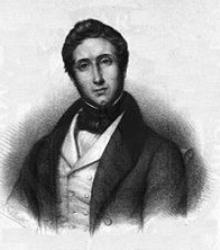
Nathaniel Wallich
 Denmark
- Nathaniel Wallich: A Pioneer of Botany and Surgery
- Service in the East India Company
- Founding of the Asiatic Society Museum
- Botanical Endeavors
- Later Years
Nathaniel Wallich: A Pioneer of Botany and Surgery
Early Life and EducationNathaniel Wallich (born Nathan ben Wolf) was a Danish and English surgeon and botanist born in the late 18th century. His father, Wolf ben Vallich, was a merchant who had emigrated from Altona, a city near Hamburg, to Copenhagen. Wallich studied botany under Martin Vahl at the Royal Academy of Surgeons in Copenhagen and later became a surgeon in Serampore, Danish India (now known as Frederiksnagore) from 1755 to 1845.
Service in the East India Company
Denmark's alliance with Napoleonic France led to the British annexation of several Danish colonies, including Frederiksnagore. Wallich was imprisoned by the British East India Company but was released on parole in 1809. He became an assistant surgeon in the East India Company in 1814 and succeeded as the Superintendent of the Indian Museum in December 1814. Later, Wallich served as an assistant to William Roxburgh, the East India Company botanist in Calcutta, who was known as the "Father of Indian Botany."
Founding of the Asiatic Society Museum
Wallich had a keen interest in Indian flora and undertook expeditions to Nepal, Burma, and Western India. As a member of the Asiatic Society, he proposed the creation of a society museum and offered his services and items from his own collection. The Society enthusiastically supported the idea and established a museum, appointing Wallich as its Honorary Curator and later Director of the Asiatic Society's Eastern Museum. Currently one of the oldest museums in the world, it was the first museum of its kind in Asia.
Botanical Endeavors
Wallich assumed leadership of the museum on June 1, 1814, and under his guidance, the museum grew rapidly with the help of donors. Most patrons were Europeans, except for one Indian, Babu Ramkamal Sen, who was initially a collector and later became the first Indian Secretary of the Asiatic Society.
Wallich was also appointed Superintendent of the East India Company's Botanical Garden in Calcutta, initially on an interim basis and later permanently. He moved to Calcutta in 1817 and served there until 1842. Together with William Carey, he undertook the publication of Roxburgh's Flora Indica (Serampore, 1820).
Later Years
Wallich brought back approximately 8,000 specimens of Indian plants to Europe in 1828, which were distributed to various public herbaria in Europe and America. He also prepared a catalog of plants from the Calcutta garden consisting of over 20,000 herbarium specimens.
For health reasons, Wallich spent several years in Mauritius between 1811 and 1813 but continued his studies there. In 1822, at the request of Sir Stamford Raffles, he traveled to Singapore to establish a botanical garden but returned to Calcutta the following year for unknown reasons.