Berthold Schwarz
 Germany
Biography of Berthold Schwarz
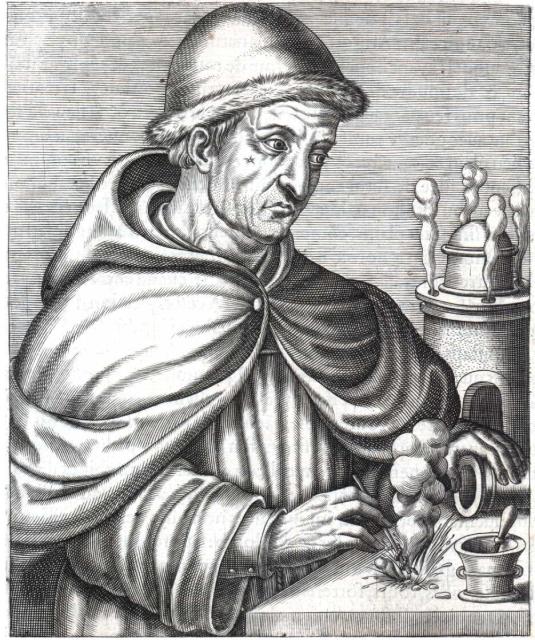
Berthold Schwarz, also known as Berthold the Black, was a historical figure who lived in the late 14th century. He was a German alchemist who is often credited with the invention of gunpowder. However, the existence of Berthold Schwarz is still debated among historians.
Some believe that Berthold Schwarz may have been a fictional character or a distorted representation of one or more real individuals. The period of his supposed activity coincided with the late 14th century, which is after the first records of gunpowder use in Europe. Some historians argue that if Berthold Schwarz did exist, he may have improved the production and application of gunpowder rather than creating it from scratch.
There are several personalities that are usually associated with the figure of Berthold Schwarz. One of them is Bertold von Lützelstetten, a scholar who worked in Paris from 1329 to 1336 and was known at the time as "Master Berthold." Another possible candidate is Konstantin Anklitzen or Angeleisen, an alchemist who was persecuted for his activities and eventually fled to Prague, where he was executed in 1388.
Some historians believe that Berthold Schwarz as a specific individual never existed and that the stories about him were attempts to attribute the invention of gunpowder to a symbolic figure. The name "Schwarz" (meaning "black" in German) was likely created based on the German term "Schwarzpulver" (meaning "black powder"). The first mention of Schwarz comes from an unnamed pyrotechnics manual from 1410, which refers to an alchemist named "Master Berthold" who accidentally discovered gunpowder. However, no specific details about this discovery or the person of Berthold are provided in the text.
Further information can be found in the work of Franz Helm, a writer from Landshut in the 1520s and 1530s. He mentions a Bernardine monk named "Berthold the Black" who discovered gunpowder and firearms in 1380 and was executed for his invention in 1388. The coincidence of the execution dates is one of the main reasons why Berthold Schwarz is associated with Konstantin Anklitzen.
According to legend, Berthold Schwarz made his discovery of gunpowder accidentally. During an alchemical experiment, he mixed saltpeter, sulfur, and charcoal in a mortar. He then placed the mortar with the remaining pestle on the fire and left the room. After a while, there was a loud explosion, and the monks who came to investigate found that the pestle had been deeply embedded into the ceiling, making it impossible to remove, even by touching the relics of Saint Barbara. This event marked the discovery of gunpowder and its military application. It also explains why the first firearms were called "mortars," as the German word for mortar means "mortar." Additionally, Saint Barbara became the patron saint of artillery.