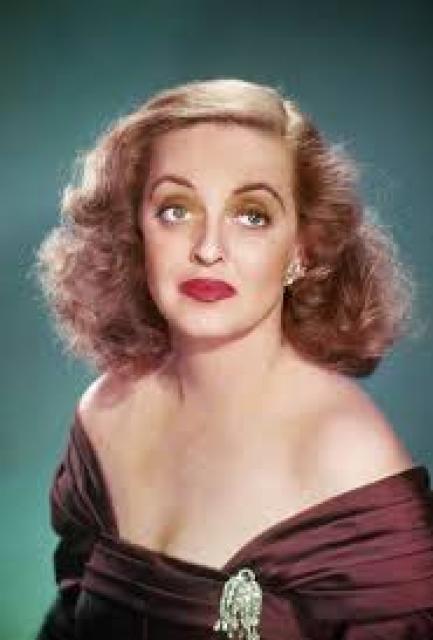
Bette Davis
 USA
USA- Early Life and Struggle
- Breakthrough in Theatre
- Conquering Hollywood
- 'The Man Who Played God'
- Oscar-Winning Star
- 'Jezebel' and 'Gone with the Wind'
- Personal Life and Later Career
- 'All About Eve'
- Family and Illness
- Legacy
Early Life and Struggle
On April 5, 1908, Ruth Elizabeth Davis was born in Lowell, Massachusetts. Her father left the family when Betty and her sister Barbara were young, leaving their mother to raise them alone. From a young age, Elizabeth aspired to become an actress, but her initial attempt to enter a drama school was rejected. The examiner, Eva Le Gallienne, claimed she lacked talent and advised her to pursue a different career.
Breakthrough in Theatre
Undeterred, Davis enrolled in a drama studio founded by John Murray Anderson. Through Anderson's connections, she was introduced to George Cukor, who cast her in a Broadway play called "Broadway." However, Cukor dismissed Davis for unknown reasons, forcing her to take a job as an usher in another theater.
In 1929, Davis joined the Provincetown Playhouse in New York City. Her debut role as Hedwig in "The Wild Duck" marked the beginning of her theatrical career. Her breakthrough came with the play "Broken Dishes," which ran for almost 200 performances and established her as a promising actress.
Conquering Hollywood
Driven by aspirations beyond the stage, Davis embarked on her journey to Hollywood in 1930. Upon arriving in Los Angeles, she sought an audition with Samuel Goldwyn, an influential producer who controlled several film studios. Initially hesitant, Goldwyn eventually gave her a contract with a weekly salary of $300.
Davis' Hollywood debut came in "Bad Sister" (1930), followed by supporting roles in "The Family" (1931) and "Waterloo Bridge" (1931). Despite her efforts, Goldwyn did not see her potential and declined to renew her contract, leaving her unemployed in 1931.
'The Man Who Played God'
Fortune smiled upon Davis when director George Arliss, working at Warner Bros., cast her in the lead role of "The Man Who Played God" (1932). The film was a major success, thrusting Davis into the spotlight. Arliss had effectively 'played God' in her career, giving her the break she desperately needed.
Oscar-Winning Star
In 1934, Davis' career reached new heights with her portrayal of Mildred in "Of Human Bondage." She continued to develop the persona of a ruthless and amoral woman, as seen in "Bordertown" (1934) and "Dangerous" (1935). Her performance in "Dangerous" as Joyce Heath earned her an Academy Award for Best Actress.
Despite her success, Davis resented the restrictions imposed by the Hollywood studio system. She longed for more freedom in choosing her roles, but her demands were often met with opposition.
'Jezebel' and 'Gone with the Wind'
When Davis was denied her desired role in "Gone with the Wind," producers sought to appease her with the lead in "Jezebel" (1938). Directed by William Wyler, "Jezebel" bore striking similarities to Margaret Mitchell's novel. Davis' captivating performance earned her a second Academy Award.
Personal Life and Later Career
Throughout the 1940s, Davis reigned supreme in Hollywood. She was likened to the legendary Eleonora Duse and was elected president of the Academy of Motion Picture Arts and Sciences. However, feelings of loneliness persisted. She married twice, experiencing tragedy when her second husband died in an accident.
In 1943, Davis married artist William Sherry and gave birth to a daughter, Barbara. She briefly withdrew from Hollywood but returned to the screen a year later. Her relationship with Sherry was strained, and he eventually left her.
'All About Eve'
In 1950, Joseph Mankiewicz offered Davis the role of an aging actress in "All About Eve." Her performance as Margo Channing earned her an Oscar nomination and the Cannes Film Festival Award. Davis credited Mankiewicz with "bringing her back from the dead."
However, this 'resurrection' proved to be fleeting. Davis' subsequent films failed to match the brilliance of her earlier work. She continued to act and received several more Oscar nominations, but could not surpass her previous achievements.
Family and Illness
During the filming of "All About Eve," Davis met actor Gary Merrill, and they married in 1951. Together, they adopted a newborn girl, Margo, and a boy, Michael, in 1954. Davis dedicated herself to motherhood and gradually reduced her acting commitments.
In the 1970s, Davis' health declined due to various illnesses. She suffered four strokes and a paralysis of the right side of her face. She underwent extensive rehabilitation, but her health continued to deteriorate.
Legacy
Bette Davis passed away on October 6, 1989, after a valiant battle with cancer. Her contribution to cinema is immeasurable. She was the first woman to lead the Academy of Motion Picture Arts and Sciences and the first individual to receive 10 Oscar nominations. Her iconic "fishbowl" eyes, which cinematographers clamored to capture, came to symbolize an entire era.
Beyond her talent, Davis possessed an indomitable spirit that commanded respect and recognition. She dared to challenge the Hollywood system and ultimately ascended to the pinnacle of cinematic stardom.


