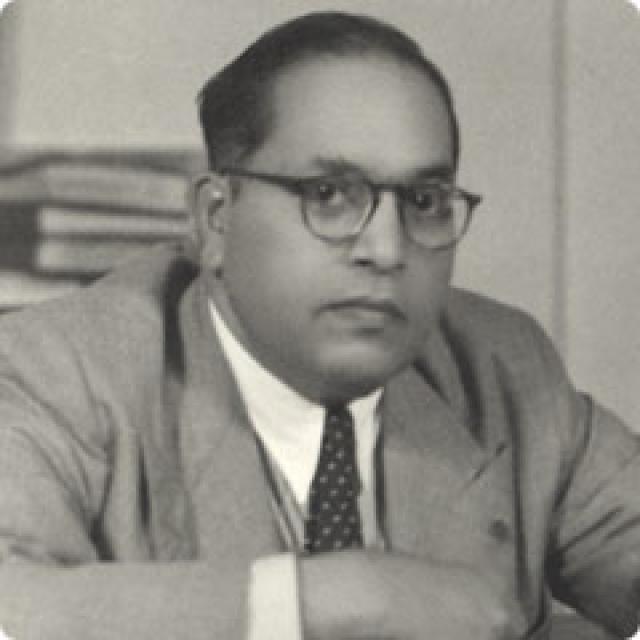
Bhimrao Ramji Ambedkar
 India
India- Introduction
- Early Life and Education
- Legal Career and Political Activism
- Separate Electorates and the Poona Pact
- Renunciation of Hinduism and Buddhism
- Role in Drafting Indian Constitution
- Other Contributions and Legacy
Introduction
B. R. Ambedkar, an Indian jurist, political leader, and champion of the "untouchables," played a pivotal role in the drafting of India's constitution and the social and religious transformation of the country.

Early Life and Education
Ambedkar was born into a family of Mahar (untouchable) caste in Maharashtra. His ancestors had served in the British East India Company's army for generations. Despite facing discrimination and societal barriers, Ambedkar pursued his education, becoming one of the first untouchables to attend college. He earned a doctorate in law and various other degrees in economics and political science, notably from Columbia University and the London School of Economics.

Legal Career and Political Activism
Returning to India as a renowned scholar, Ambedkar practiced law for a few years before embarking on a political career as a champion for the rights of untouchables. By the 1930s, he had organized several public actions that made him a prominent figure in Indian politics.
Ambedkar criticized the major political parties of India for their inadequate attention to the issue of the caste system. He was a vocal critic of Mahatma Gandhi and his Indian National Congress (INC) supporters. While Gandhi condemned caste distinctions and even declared himself an "outcaste," Ambedkar found his views romantic and idealistic.
Ambedkar rejected Gandhi's term "Harijan" ("children of God") for untouchables as derogatory and condemned Gandhi's idealization of village life, advocating instead for education and urban migration for the depressed classes. He believed that Gandhi's critique of the caste system was too lenient, addressing individual injustices but not seeking to dismantle it entirely.
Ambedkar's radical views made him highly unpopular among orthodox Hindus, even those who had previously condemned the oppression of untouchables. He demanded complete equality, not just an easing of their condition.
Separate Electorates and the Poona Pact
Ambedkar demanded separate electorates for untouchables, a proposal that Gandhi vehemently opposed, fearing a division of Indian society. In 1932, the British agreed to Ambedkar's proposal, prompting Gandhi to begin a "fast unto death" while in prison. Gandhi's fast garnered widespread support among the orthodox across India. Fearing unrest if Gandhi died, Ambedkar was forced to compromise. The Poona Pact of 1932 granted untouchables separate electorates but limited their number.
Renunciation of Hinduism and Buddhism
In 1936, Ambedkar renounced Hinduism, publicly declaring his intention to find a new religion that would grant equal rights to untouchables. He converted to Buddhism in 1956, along with 500,000 of his followers.
Role in Drafting Indian Constitution
After India gained independence in 1947, Ambedkar was appointed as the first Law Minister in the newly formed government. He chaired the committee responsible for drafting the Indian Constitution, drawing inspiration from the Buddhist Sangha, which had established voting procedures, debate protocols, and administrative regulations.
The Constitution drafted by Ambedkar enshrined fundamental rights, including freedom of religion, abolished the concept of "untouchability," and prohibited all forms of discrimination. He also ensured the inclusion of economic and social rights for women and quotas in government service and educational institutions for members of depressed castes.
Other Contributions and Legacy
Ambedkar was a prolific writer and an authority on comparative religions. His writings on caste, Buddhism, and social justice have had a profound impact on Indian society.
He founded the Buddhist Society of India and authored several influential books, including "Annihilation of Caste," "The Untouchables," and "Buddha and His Dhamma." His ideas have inspired numerous political parties, organizations, and unions dedicated to protecting the rights of Dalits (formerly known as untouchables).
Ambedkar's legacy remains controversial, with some accusing him of polarizing Indian society. However, his contributions to the eradication of caste discrimination and the promotion of social justice cannot be overstated. He is widely regarded as one of the most important figures in modern Indian history.


