Bibish
 Uzbekistan
- A Life Between Khiva and a New Beginning
- The Memoir That Made Her Known
- Migration and a Changed Public Life
- A Writer’s Voice
A Life Between Khiva and a New Beginning
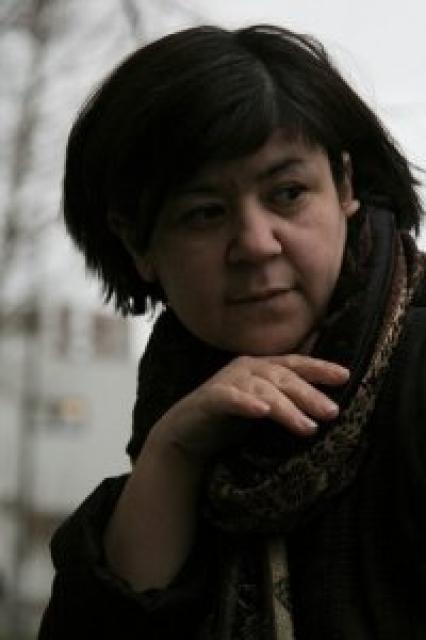
Bibish is the pen name of Hadjarbibi Siddikova, an Uzbek-born writer whose first book brought her from relative obscurity into the Russian literary spotlight. She grew up in a village near Khiva, where family life and local traditions placed firm limits on what girls were expected to do. From an early age, she loved dancing and writing, and she pushed to pursue an education even when her ambitions met resistance.
Siddikova trained as a teacher and later studied choreography. The name Bibish came from her mother-in-law, who shortened the longer Hadjarbibi because it was easier to say. The affectionate nickname eventually became her author name, carrying the voice of a woman who would tell her own story in plain, direct language.
The Memoir That Made Her Known
Her breakthrough book, The Dancer from Khiva, or The Story of a Simpleton, appeared in Russian in 2004. Framed as a personal narrative, it follows her childhood in Uzbekistan, her determination to dance, her marriage, and the difficult transitions that followed. The book describes the pressure of traditional expectations and the hardships faced by women with limited choices, but it also makes room for humor, stubborn hope and everyday details.
Readers and critics took notice of its unpolished, conversational voice. Siddikova’s story did not arrive as a polished literary persona with a long publishing history; it seemed to come directly from lived experience. The memoir received major attention in Russia, winning the 2004 National Bestseller prize and the Book of the Year debut award. Its candid perspective made Bibish a distinctive new figure in contemporary Russian-language literature.
Migration and a Changed Public Life
After marrying, Siddikova lived in Turkmenistan before moving with her husband and two sons to Russia in the late 1990s. The family eventually settled in Vladimir, where she worked and taught Eastern dance. The experience of migration became a central part of her public story: her book gave readers a view of life between Uzbekistan and Russia, including the challenges of making a home, finding work and being treated as an outsider.
The English translation, published as The Dancer from Khiva: One Muslim Woman’s Quest for Freedom, introduced the memoir to an international audience in 2008. It helped place Bibish among writers whose autobiographical work crosses national and linguistic boundaries. Her account was discussed as literature and as testimony, prompting debate about how raw personal narrative can be shaped for publication without losing its distinctive voice.
A Writer’s Voice
Bibish’s writing draws much of its force from its first-person immediacy. She records small encounters and practical obstacles with the same candor as the larger turning points in her life. The result is a voice that can feel confessional, funny and quietly defiant at once. Rather than present herself as an abstract symbol, she writes as a particular woman negotiating family, work, migration and the desire to make choices for herself.
Her best-known book remains a portrait of persistence: a young woman determined to dance and learn, and an adult who turned personal experience into a widely read story. Through that memoir, Bibish brought the texture of an Uzbek childhood and a migrant life in Russia to readers who might otherwise never have encountered either. Her literary legacy rests on the force of that first-person voice and the courage to put an unconventional life on the page.