Bishnu Charan Ghosh
 India
India- Birth and Family Background
- Introduction to Yoga and Physical Culture
- Establishment of the Yoga College and Physical Culture
- Global Influence and Publications
- Legacy: Bodybuilding and Yoga Competitions
- Ghosh Yoga and Notable Students
- Final Transition and Legacy
Birth and Family Background
Bishnu Charan Ghosh, an illustrious Indian yogi and physical culturist, emerged into the world in 1903. His birthplace was Calcutta, India, where he spent the majority of his life. Ghosh's lineage was steeped in the practice of kriya yoga, an ancient tradition passed down through his family. His father, Bhagabati Charan Ghosh, was a renowned disciple of Sri Lahiri Mahashay, the founder of kriya yoga. Meanwhile, Ghosh's mother, Gyana Prabha Ghosh, was a devoted homemaker. Both hailing from the illustrious Kshatriya caste, Ghosh's family instilled in him a profound appreciation for the ancient yogic sciences. Notably, his elder brother, Mukunda Lal Ghosh, later known as Paramahansa Yogananda, gained international acclaim as a renowned kriya yoga master.
Introduction to Yoga and Physical Culture
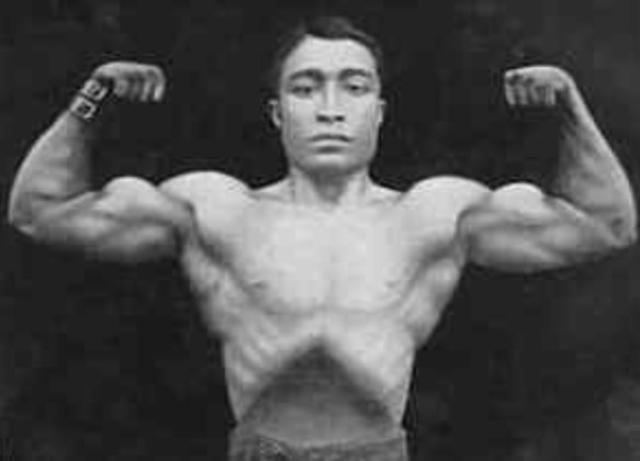
Ghosh's journey into the realm of yoga commenced under the tutelage of his father and elder brother. His first exposure to yoga occurred at Ranchi Boys' School in Bengal, where he was initiated as one of Paramahansa Yogananda's first seven disciples. As a young man, Ghosh's slender and delicate physique motivated him to explore the realm of physical culture, then gaining popularity in Calcutta. These exercises took the form of Indian gymnastics, particularly the indigenous "baayam" style, which was prevalent at the time. By 1920, Ghosh had joined the All Bengal Physical Culture Association and established his own gymnasium.
Establishment of the Yoga College and Physical Culture
In 1923, at the tender age of twenty, Ghosh founded the Yoga and Physical Culture College in Calcutta. This institution continues to operate to this day under the leadership of Ghosh's granddaughter, Muktamala Ghosh. Ghosh's college became a hub for the dissemination of his unique training system, which combined 84 classical yoga poses with rigorous physical exercises. He demonstrated extraordinary feats of physical strength and body control, showcasing the transformative potential of his teachings.
Global Influence and Publications
Ghosh's reputation as a master yogi extended beyond India's borders. In 1930, he co-authored the seminal work, "Muscle Control and Barbell Exercise," alongside K.C. Sen Gupta. This publication further solidified his expertise in physical culture. In the early 1930s, Ghosh and his brother, Paramahansa Yogananda, embarked on a tour of the United States, captivating audiences with their demonstrations of yoga and body-building techniques. Their visit garnered immense interest, earning them an invitation to meet with President Roosevelt at the White House. Footage from this encounter was later featured in the 2014 documentary, "Awake: The Life of Yogananda."
In 1961, Ghosh published another notable work, "Yoga Cure." Recognizing his exceptional ability to identify and nurture talent, he trained numerous disciples who went on to become influential teachers in their own right.
Legacy: Bodybuilding and Yoga Competitions
Bishnu Charan Ghosh played a pivotal role in the genesis of international bodybuilding competitions. He conceptualized and organized the Mr. Universe championship, first held in the United Kingdom in 1948, and served as its inaugural judge. Ghosh's contributions to the development of bodybuilding extended to his membership in the International Olympic Committee and the International Federation of Bodybuilding. Additionally, he graced the halls of Columbia University in the United States as a visiting professor from 1939 onwards.
In recognition of Ghosh's dedication to yoga, the International Annual Yoga-Sport Championship held in Los Angeles is named in his honor. This prestigious event has taken place since 2003, perpetuating his legacy.
Ghosh Yoga and Notable Students
During his lifetime, Bishnu Charan Ghosh established a therapeutic clinic, later renamed the Institute of Yogotherapy, in his hometown of Calcutta. Through this center, he provided yogic healing to his fellow citizens.
His Yoga and Physical Culture College in Calcutta became the epicenter of Ghosh yoga, a unique synthesis of yoga poses and physical exercises. The college, a family-run enterprise, remains the custodian of this tradition. In 2023, the college celebrated its 100th anniversary.
Buddha Bose emerged as one of Ghosh's most renowned disciples, showcasing the efficacy of his techniques during Ghosh's lectures in India, Japan, and the United States. In 2015, Bose's long-lost manuscript, "84 Asanas," was rediscovered and published.
Bikram Choudhury, another celebrated student of Ghosh, enrolled at the Yoga and Physical Culture College and immersed himself in daily yoga practice. At the age of 17, Choudhury sustained a severe knee injury that doctors predicted would impair his mobility permanently. However, through the restorative power of yoga under Ghosh's guidance, Choudhury regained full functionality. Inspired by Ghosh, Choudhury established several yoga schools in India, which proved so successful that he ventured to Japan and opened additional centers. His success eventually propelled him to the United States.
Monotosh Roy, another prominent student of Ghosh, was an accomplished yoga practitioner and Indian bodybuilder who captured the title of Mr. Universe in 1951. Roy's triumph marked a significant milestone as the first Indian and Asian to achieve this prestigious distinction.
Gouri Shankar Mukerji (GSM), a close friend, personal physician, and star pupil of Ghosh, worked alongside him in the 1940s, 50s, and 60s. Their mission during this period was to disseminate the benefits of yoga to the general population of Bengal, their shared homeland. GSM later pursued his medical degree in Germany and authored "84 Yoga Asanas from Bishnu Ghosh Yoga Lineage," meticulously documenting the 84 poses with comprehensive medical explanations. This publication made groundbreaking contributions to the scientific understanding of yoga's physiological effects.
Prem Sundar Das, an experienced practitioner and researcher in the therapeutic applications of Ghosh yoga, dedicated his life to teaching at Ghosh's Yoga and Physical Culture College. Known to Western yogis through his contributions to Bikram Choudhury's teacher training programs, Dasauthored the book "Yoga Panacea."
Final Transition and Legacy
Bishnu Charan Ghosh attained mahasamadhi on July 9, 1970, a conscious departure from the physical body similar to that of his elder brother, Paramahansa Yogananda, who had passed in this manner on March 7, 1952.
Ghosh's legacy continues to inspire and influence the world of yoga and physical culture. He is revered as a visionary who bridged the East and West, promoting the transformative power of ancient yogic practices. His pioneering work laid the foundation for modern yoga and bodybuilding, leaving an enduring mark on the global fitness landscape.