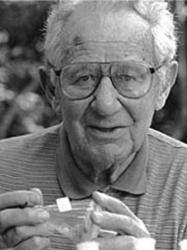
Vladimir Kistyakovsky
- Vladimir Aleksandrovich Kistiakovsky: A Pioneer in Physical Chemistry
- Education and Research at Petersburg University
- Collaboration in Leipzig
- Return to Russia and Struggles
- Professorship at the Polytechnic Institute
- Research Contributions
- Development of the hydration theory of ions
- Recognition and Legacy
Vladimir Aleksandrovich Kistiakovsky: A Pioneer in Physical Chemistry
Early Life and InfluencesVladimir Aleksandrovich Kistiakovsky was born on October 12, 1865 (September 30, by the Julian calendar) in Kyiv, Ukraine. His father, Alexander Fyodorovich, was a prominent professor and public figure, while his uncle, Vladimir Fyodorovich, was a physician who earned a doctorate in medical chemistry.
Kistiakovsky's early upbringing in a progressive and intellectually stimulating household shaped his scientific and societal views. At the age of 18, he enrolled in the Physics and Mathematics Faculty of Kyiv University, influenced by his uncle and the prevailing trend among Russian youth towards science education.
Education and Research at Petersburg University
In 1884, Kistiakovsky transferred to Petersburg University due to protests over teaching conditions at Kyiv University. Among the renowned professors at Petersburg were D.I. Mendeleev in general chemistry and N.A. Menshutkin in analytical chemistry.
Kistiakovsky's studies in organic chemistry under M.D. Lvov inspired his first research paper, published a year later. However, he soon shifted his focus to physical chemistry, particularly the electrolytic dissociation theory.
In 1890, Kistiakovsky submitted a thesis titled "The Planck-Arrhenius Hypothesis," proposing that ions in electrolyte solutions are not freely dissociated, but rather chemically bound to solvent molecules (hydration in water). This original insight challenged the prevailing Arrhenius-Ostwald theory.
Collaboration in Leipzig
Seeking further expertise, Kistiakovsky traveled to Leipzig in 1889 and joined Wilhelm Ostwald's laboratory, a leading center for research on electrolytic dissociation. He conducted electrochemical experiments on double salts and consulted with Svante Arrhenius, who became a close friend.
Return to Russia and Struggles
Upon returning to Russia in 1890, Kistiakovsky faced financial and professional challenges. He worked in various administrative and teaching roles while continuing his research in physical chemistry.
Despite receiving a magister's degree in 1892, his efforts to secure a professorship at Petersburg University were repeatedly frustrated due to negative reviews from influential opponents.
Professorship at the Polytechnic Institute
In 1902, Kistiakovsky finally obtained a position as a laboratory assistant at the newly established Polytechnic Institute. He dedicated himself to building a state-of-the-art physical chemistry laboratory, which became a model for other universities in Russia.
Research Contributions
Kistiakovsky made significant contributions to the field of physical chemistry, including:
Development of the hydration theory of ions
Research on chemical kinetics and absolute unit systemsStudies on the third law of thermodynamics
Work During World War I and Beyond
During World War I, Kistiakovsky investigated natural resources in Ukraine and the Caucasus. He also contributed to scientific research in Kyiv and Pятигорск, where he was appointed to the Ukrainian Academy of Sciences.
After returning to Petrograd (later Leningrad) in 1922, Kistiakovsky continued his teaching and research in physical chemistry and electrochemistry. He also pursued interests in colloid chemistry, developing the "film theory" of corrosion.
Recognition and Legacy
In 1925, Kistiakovsky was elected a corresponding member of the Academy of Sciences of the USSR, and in 1929, a full member. He received numerous international honors and was instrumental in establishing the Colloid and Electrochemistry Institute within the Academy of Sciences.
Vladimir Aleksandrovich Kistiakovsky passed away on February 14, 1939, leaving an enduring legacy as a brilliant scientist and a pioneer in the field of physical chemistry. His research and theories continue to shape our understanding of chemical phenomena.