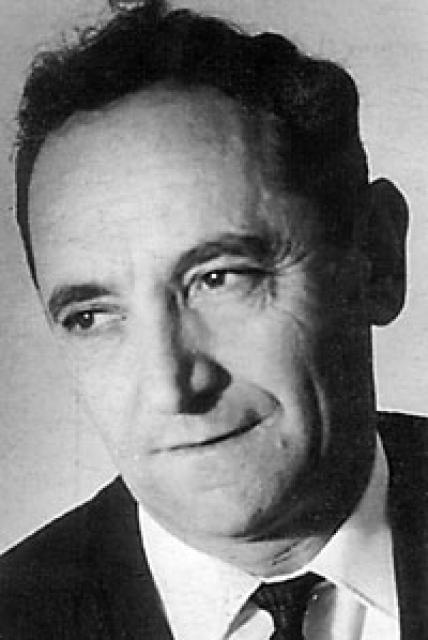
Boris Vlastaru
 Moldova
- Boris Vlăstaru: A Moldovan Writer's Odyssey
- World War II and Military Service
- Deportation and Return
- Literary Career in Moldova
- Life in Israel and Late Writing
- Major Themes and Literary Significance
- Legacy and Recognition
Boris Vlăstaru: A Moldovan Writer's Odyssey
Early Life and EducationBorn as Burech Vexler in 1922 in the Bessarabian town of Rezina, Boris Vlăstaru began his life as the son of a tobacco grower. He received his early education at a local gymnasium in Rezina and later in Orhei.
World War II and Military Service
The outbreak of World War II found Vlăstaru evacuated near Beslan in the North Caucasus and eventually in Siberia. There, he enrolled in a school for mechanization and volunteered for the front alongside his brother, Zisa. By the war's end, he had risen to the rank of lieutenant in Austria and served as a translator.
Deportation and Return
Tragically, Vlăstaru's parents were deported to Siberia in 1947 and only returned to Moldova in the mid-1950s. After his demobilization, he settled in Chișinău and pursued journalism in the newspapers "Țăranul Moldovei" and "Moldova Socialistă."
Literary Career in Moldova
Beginning in 1953, Vlăstaru published 18 works of prose in Moldovan, including novels, short stories, essays, and sketches. Many of his books were translated into Russian by himself and the writer Mihail Hazin.
Life in Israel and Late Writing
In 1972, Vlăstaru immigrated to Israel, where he continued to write in Moldovan and Russian. In his later years, he also wrote in Hebrew. Six collections of his prose were translated into Hebrew by Yehuda Gur-Aryeh.
Major Themes and Literary Significance
Vlăstaru's writing often explored rural Moldovan life and the events of World War II, including the Holocaust. His work has been praised for its vivid depictions of ordinary people and its unflinching depiction of human suffering.
Legacy and Recognition
In 1993, a collection of Vlăstaru's selected works was published in Chișinău. In 2006, a memorial plaque honoring him was unveiled at the city library named after Mihail Eminescu in his hometown of Rezina.


